
TL;DR
Google's Knowledge Graph is a knowledge base of 500+ billion facts about entities (people, businesses, concepts). It powers Knowledge Panels, AI Overviews and Gemini responses. Being present in it means being recognised as a trusted entity by the entire Google ecosystem. This guide details the 7 steps to integrate your business into it.
Google's Knowledge Graph is perhaps the most influential database in the world. Launched in 2012, it contains more than 500 billion facts about billions of entities — people, businesses, places, concepts. When Google displays a Knowledge Panel on the right side of results, it is the Knowledge Graph that powers it.
But in 2026, the Knowledge Graph plays an even more strategic role: it directly powers Google's AI Overviews and Gemini responses. Being present in the Knowledge Graph means being recognised as a trusted entity by the entire Google ecosystem.
This guide shows you how to integrate your business into it, step by step.
1. What is Google's Knowledge Graph?

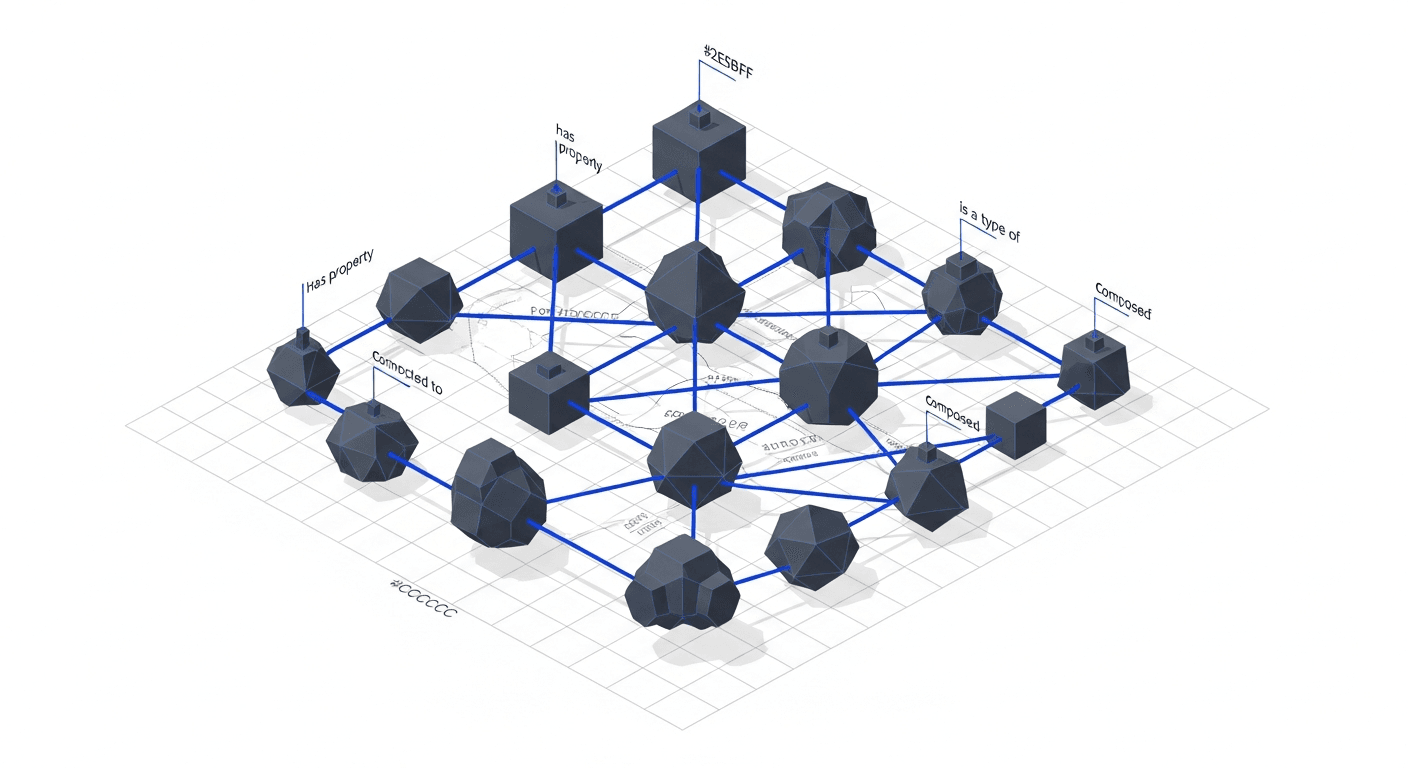
The Knowledge Graph is a structured knowledge base that stores relationships between entities. Unlike a web page index, it stores facts: "AISOS is a company. AISOS is headquartered in Brussels. AISOS provides AI visibility services."
Google feeds the Knowledge Graph from multiple sources:
- Wikipedia and Wikidata: primary sources for notable entities.
- Structured data (schema.org): information declared on your site via JSON-LD.
- Google Business Profile: verified commercial information.
- Authoritative sources: company registries, government databases, recognised media.
- Consistent web mentions: when multiple sources agree on a fact, Google considers it reliable.
Diagram: Knowledge Graph structure — entities, attributes and relationships
2. Why the Knowledge Graph is crucial for AI visibility
The Knowledge Graph is the foundation on which AI visibility at Google rests:
It powers AI Overviews
When Google generates an AI Overview, it draws from the Knowledge Graph to identify relevant entities and their attributes. A company present in the KG has a higher chance of being cited.
It strengthens E-E-A-T
Experience, Expertise, Authority and Trust (E-E-A-T) are signals that Google evaluates through the Knowledge Graph. Being recognised as an entity means having a "trust passport" in the Google ecosystem.
It influences Gemini
Gemini, Google's LLM, has access to the Knowledge Graph. Entities present in the KG have a higher probability of being mentioned in Gemini responses.
Dr. Denny Vrandecic, creator of Wikidata and former Knowledge Graph engineer at Google (Stuttgart), explains:
"The Knowledge Graph is the bridge between the unstructured web and structured AI systems. Companies that invest in their entity representation benefit from a systemic advantage throughout the entire Google ecosystem."
3. The 7 steps to integrate the Knowledge Graph
Step 1: implement the complete Organization schema
Deploy an Organization JSON-LD schema on your homepage with: name, logo, address, founder, creation date, description, social networks, and sameAs pointing to your external profiles.
Step 2: create and optimise your Google Business Profile
A complete and verified Google Business Profile is one of the strongest signals for the Knowledge Graph. Fill in all sections, add photos, and collect reviews.
Step 3: obtain a Wikipedia page (if eligible)
Wikipedia is the number one source of the Knowledge Graph. If your company meets notability criteria, a Wikipedia page is the most powerful lever. Note: never create a self-promotional page — respect admissibility rules.
Step 4: create a Wikidata entity
Wikidata is more accessible than Wikipedia. Create an entity for your company with basic properties (type, country, website, founder, creation date). This is a direct signal for the Knowledge Graph.
Step 5: ensure multi-source consistency
Your company name, address and description must be identical across all platforms: website, LinkedIn, Crunchbase, company registries. Inconsistency is the main barrier to KG integration.
Step 6: obtain brand mentions in authoritative sources
Articles in the European press, references in academic publications and mentions on government sites strengthen your entity signal.
Step 7: claim your Knowledge Panel
If a Knowledge Panel appears for your company, claim it via Google Search. This allows you to suggest modifications and verify the information displayed.
4. Comparison: Knowledge Graph signals
| Signal | KG Impact | Difficulty | SME Accessibility |
|---|---|---|---|
| Wikipedia page | Very high | Very high | Low (strict criteria) |
| Wikidata entity | High | Medium | Good |
| Organization JSON-LD schema | High | Technical | Good |
| Google Business Profile | High | Low | Excellent |
| European press mentions | Medium-high | Medium-high | Medium |
| NAP consistency across platforms | Medium | Low | Excellent |
5. Verify and claim your Knowledge Panel
Here is how to verify your presence in the Knowledge Graph:
- Search for your company name on Google. If a Knowledge Panel appears on the right, you are in the KG.
- If no panel appears, search for your company on the Google Knowledge Graph Search API.
- If you have a panel, click "Claim this Knowledge Panel" at the bottom of the panel and follow the verification procedure.
- Once claimed, you can suggest modifications (logo, description, social links).
Prof. Stefan Decker, Director of Fraunhofer FIT (Germany) and semantic web expert, advises:
"Claiming the Knowledge Panel is often overlooked by SMEs. Yet it is the most direct way to control your representation in the Google ecosystem — and by extension, in the AI responses powered by the Knowledge Graph."
Steps to claim a Google Knowledge Panel
6. FAQ — Knowledge Graph
Is my business too small for the Knowledge Graph?
Not necessarily. The Knowledge Graph also integrates local entities via Google Business Profile. Even a local SME can have a Knowledge Panel if its data is consistent and verified.
How long does it take to appear in the Knowledge Graph?
Variable. A verified Google Business Profile can generate a panel within a few weeks. A Wikipedia page can take months. Multi-source consistency is the accelerating factor.
Does the Knowledge Graph influence organic ranking?
Not directly, but indirectly. Being recognised as an entity strengthens E-E-A-T signals, which influences ranking. It is also a prerequisite for rich results and AI Overviews.
Can I modify my Knowledge Panel information?
Yes, after claiming. You can suggest modifications (logo, description, website link). Google verifies them before publication. The process typically takes 3-7 days.
Is the Knowledge Graph specific to Google?
Yes, but the concept exists elsewhere: Bing has its own Knowledge Graph, and LLMs like ChatGPT use similar knowledge bases. Optimising for Google's KG indirectly benefits your visibility on other platforms.
What is the link between the Knowledge Graph and SEO entities?
The Knowledge Graph IS Google's entity database. Optimising for SEO entities means optimising for the Knowledge Graph. The two concepts are inseparable.
Conclusion: the Knowledge Graph, foundation of your AI visibility
Being present in Google's Knowledge Graph means having an identity card in the world's most widely used AI ecosystem. It is a long-term investment that pays growing dividends as AI takes a central place in search.
AISOS supports businesses in their Knowledge Graph integration: entity audit, technical implementation, brand authority strategy. Contact us to get started.
Integrate the Knowledge Graph

