Preferred Sources in Google AI Overviews: how to get selected as a preferred source
Practical guide to understanding Google's Preferred Sources system and optimizing your strategy to become a preferred source in AI Overviews.

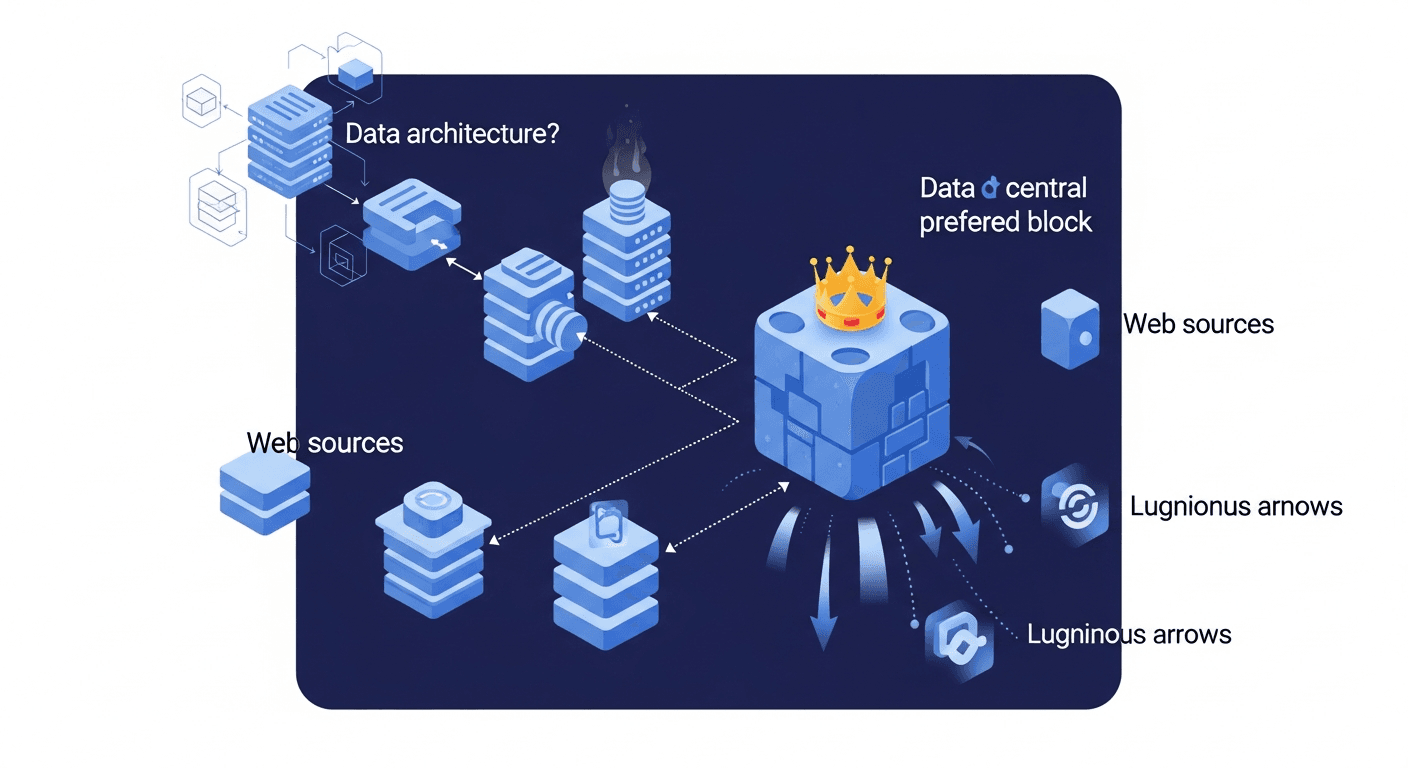
Google has just reached a decisive milestone in the evolution of its search engine. The Preferred Sources system, initially tested on select queries, is now expanding across all AI Overviews and the new AI Mode. For B2B companies, this represents a paradigm shift: being selected as a preferred source by Google means appearing in a dominant position in AI-generated responses, with unprecedented visibility and credibility.
Unlike traditional SEO where ten results share the first page, AI Overviews only cite two to four sources per response. Being excluded from this selection means becoming invisible on a growing portion of searches. Sundar Pichai, Google's CEO, has confirmed that AI Overviews already generate more engagement than traditional results for certain query categories.
This guide explains exactly how the Preferred Sources system works, what criteria Google uses to select its preferred sources, and most importantly, what actions to implement now to position your company among the chosen few.
What is Google's Preferred Sources system?
The Preferred Sources system is the mechanism by which Google selects and highlights certain sources over others in its AI Overviews responses. This isn't simply an algorithmic ranking: Google establishes a hierarchy of trust among available sources for each topic.
Technical operation of Preferred Sources
When a user asks a question that triggers an AI Overview, Google's system proceeds through several stages:
- Intent identification: Google analyzes the query to determine the type of information sought (factual, comparative, tutorial, expert opinion).
- Source pool selection: from millions of indexed pages, Google identifies those that address the topic with sufficient depth.
- Trust evaluation: each source in the pool is assessed according to enhanced E-E-A-T criteria (Experience, Expertise, Authoritativeness, Trustworthiness).
- Preferred status assignment: sources that exceed a trust threshold become eligible for preferred citation.
Preferred status is not permanent. It's dynamically re-evaluated based on content freshness, external trust signals, and relevance to the specific query.
Difference between AI Overviews and AI Mode
Google is deploying two distinct interfaces using the Preferred Sources system:
AI Overviews appears automatically at the top of search results for certain queries. The format is compact, with a synthetic response and two to three cited sources. This is the format most users encounter today.
AI Mode is a complete conversational interface, similar to ChatGPT, accessible via a dedicated tab. Responses are more detailed, sources more numerous, and users can ask follow-up questions. Google is gradually expanding access to AI Mode in 2025.
In both cases, the Preferred Sources system determines which companies receive maximum visibility.
Google's selection criteria for preferred sources
At AISOS, we analyze sources cited in AI Overviews daily to identify selection patterns. Here are the criteria that consistently emerge.
Demonstrated topical authority
Google favors sources that have established recognized authority on a specific subject rather than generalists. A cybersecurity company that regularly publishes on SMB data protection will be favored on these queries over a general tech media outlet.
This authority is built through:
- A coherent and comprehensive content corpus on the topic
- Backlinks from other expert sources in the sector
- Mentions in recognized professional publications
- Regular presence over several years (publication history)
Accuracy and verifiability of information
Google AI actively verifies claims present in candidate content. Sources that cite verifiable data, referenced studies, and documented facts receive a higher trust score.
Content containing vague claims, unsourced statistics, or information contradicted by consensus is systematically excluded from the Preferred Sources pool.
Content freshness and updates
For evolving subjects, Google favors recently updated content. A 2023 article on GDPR regulations will rank lower than a 2025 article incorporating the latest jurisprudence.
The last modification date matters as much as the initial publication date. AISOS audits reveal that content updated within the last six months is cited three times more often than stagnant content.
Structural clarity and machine readability
Content optimized for AI Overviews presents an explicit logical structure that language models can easily parse:
- Coherent heading hierarchy (H2, H3, H4)
- Short paragraphs each answering a specific question
- Bullet points for enumerations
- Explicit definitions of technical terms
- Appropriate Schema.org markup (FAQ, HowTo, Article)
Content strategy to become a preferred source
Obtaining Preferred Source status requires a deliberate editorial strategy. Here are the approaches that work in 2025.
Build complete topical clusters
Rather than publishing isolated articles, build content clusters around your key expertise areas. A cluster includes:
- A comprehensive pillar page on the main subject (2500+ words)
- Five to ten satellite articles addressing specific sub-topics
- Systematic internal linking between these contents
- Regular updates to the entire cluster
This approach signals to Google that your site is a complete resource on the topic, not simply an occasional contributor.
Answer the questions your clients actually ask
AI Overviews primarily trigger on informational queries. To be cited, your content must answer your target audience's real questions.
Practical method:
- List the twenty most frequent questions your sales team receives
- Analyze "People Also Ask" queries on your keywords
- Consult professional forums in your sector (LinkedIn, Reddit, specialized forums)
- Create dedicated content for each identified question
Adopt a direct response format
Content selected by AI Overviews shares one characteristic: it directly answers the question in the opening paragraphs before developing nuances.
Recommended structure for each article:
- Introduction paragraph with synthetic response (50-80 words)
- Structured development with evidence and examples
- Practical section (steps, checklist, recommendations)
- Conclusion with broader perspective
This structure allows Google to easily extract a relevant snippet for AI Overviews while offering depth to readers who view the complete article.
Technical optimization for AI Overviews
Beyond content, several technical factors influence selection by the Preferred Sources system.
Advanced Schema.org markup
Structured markup helps Google understand the nature and reliability of your content. Priority schemas for AI Overviews:
- Article with author, datePublished, dateModified
- FAQPage for Q&A content
- HowTo for step-by-step practical guides
- Organization with verifiable contact information
- Person for authors with documented credentials
Loading speed and accessibility
Google continues to favor sites offering an excellent user experience. Core Web Vitals remain a selection factor, even for AI Overviews. A slow or poorly mobile-optimized site will be penalized in the candidate source pool.
Information architecture
Clear site architecture facilitates crawling and topical understanding by Google:
- Descriptive and hierarchical URLs
- Marked-up breadcrumbs
- Updated XML sitemap
- Contextual internal linking
Actionable checklist: 15 steps to become a Preferred Source
Here's an operational checklist to follow to maximize your selection chances.
Initial audit (week 1)
- Identify your three to five primary expertise topics
- Analyze existing AI Overviews on these topics: who gets cited?
- Audit your current content: depth, freshness, structure
- List content gaps compared to cited competitors
Content creation (weeks 2-8)
- Create or redesign one pillar page per priority topic
- Develop five satellite articles per cluster
- Integrate sourced data in each piece of content
- Structure with direct response in introduction
- Add appropriate Schema.org markup
Authority building (ongoing)
- Obtain backlinks from industry publications
- Publish original studies or proprietary data
- Develop expert authors' presence on LinkedIn
- Seek citations in reference media
Maintenance and optimization (monthly)
- Update content with latest data
- Monitor AI Overviews positions (dedicated tools)
- Analyze new sources cited by Google on your topics
Measuring your presence in AI Overviews
Tracking your visibility in AI Overviews requires specific tools and methods.
Monitoring tools
Several solutions allow tracking your presence:
- Google Search Console: the "Search appearance" report is progressively integrating AI Overviews data
- Specialized third-party tools: platforms like Semrush and Ahrefs are developing AI Overviews tracking features
- Manual monitoring: regular searches on your target queries in private browsing
Metrics to track
Key indicators for evaluating your Preferred Sources performance:
- Number of queries where your site is cited in AI Overviews
- Position in the source list (first cited source vs last)
- Traffic evolution from AI Overview queries
- Citation rate compared to competitors on your topics
Conclusion: act now to secure your future visibility
Google's Preferred Sources system is redefining SEO rules. Companies that build their topical authority today and optimize their content for AI Overviews will gain a lead that's difficult to catch up to.
The window of opportunity is open: Google is gradually expanding AI Overviews and AI Mode to more queries, but the pool of trusted sources is not yet fixed. Now is the time to establish your position.
SMBs and mid-market companies that invest now in a structured GEO strategy, with reference content on their business expertise, will be the ones Google cites tomorrow as preferred sources.
Next step: conduct an audit of your current visibility in AI Overviews on your strategic queries. Identify who Google cites today, and build the plan to take their place. AISOS supports B2B leaders in this transition to generative SEO, with comprehensive GEO audits and customized content strategies.


