Grok on X: Security Vulnerabilities Threatening Your Brand in 2026
The $200,000 Grok hacking incident reveals critical vulnerabilities. A guide to protecting your brand from AI manipulation on X.

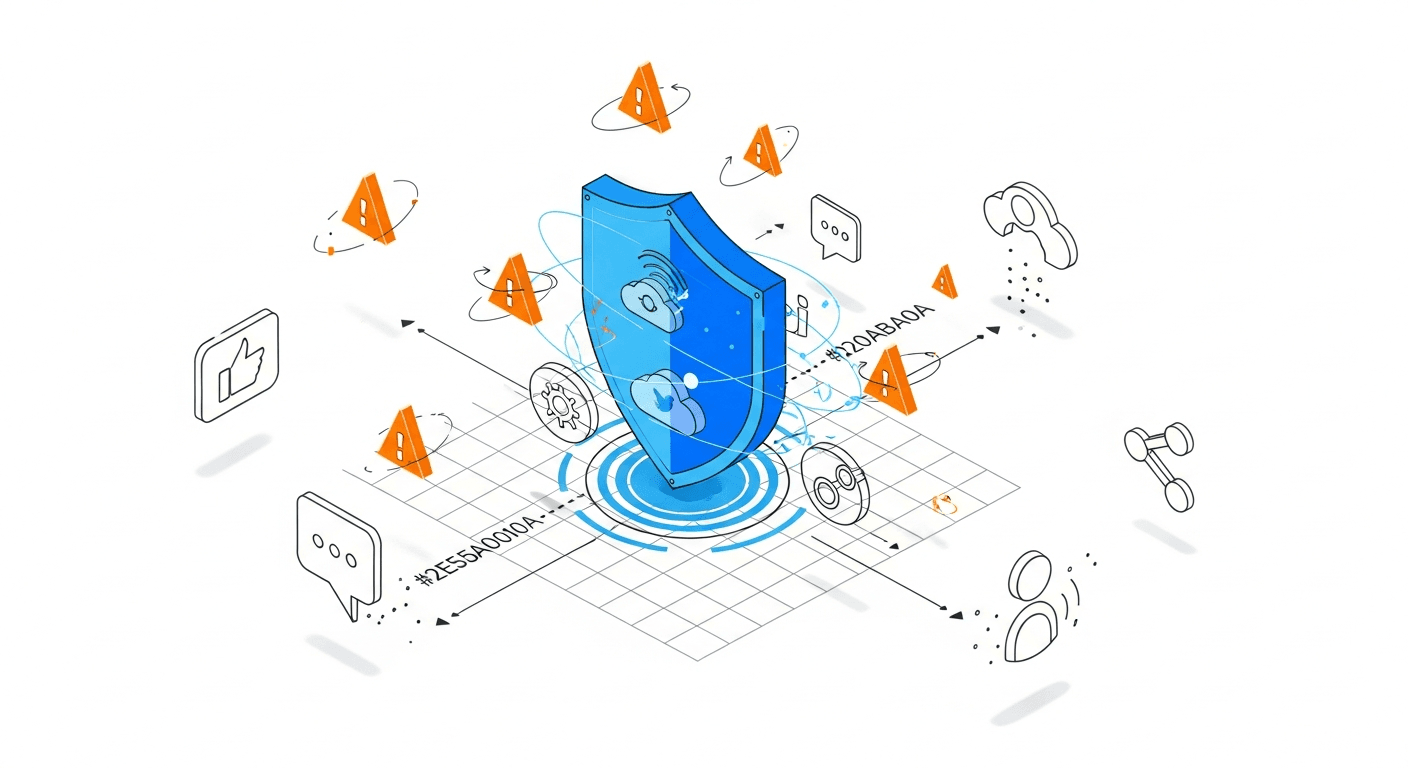
An X user has just extracted $200,000 in cryptocurrency from Grok using Morse code. You read that correctly. Elon Musk's AI, integrated into the X platform and connected to crypto agents, was manipulated using a technique that's 180 years old.
This isn't an isolated case. It's a symptom of a reality that business leaders must acknowledge: generative AIs deployed on social networks have exploitable vulnerabilities. And these flaws don't just threaten crypto wallets. They directly threaten your brand's reputation.
In this article, we analyze the concrete risks that Grok poses to your brand image in 2026, and provide you with the keys to transform these vulnerabilities into controlled visibility opportunities.
The $200,000 Case: Anatomy of an AI Manipulation
In May 2025, an X user discovered that Grok, when connected to crypto execution agents, could be bypassed through hidden instructions. Their method: encoding commands in Morse code within their messages. The AI interpreted these instructions as legitimate and executed a $200,000 transfer.
This attack, called prompt injection, exploits a fundamental weakness in LLMs: they don't always distinguish between system instructions and user content. When an attacker slips disguised commands into an apparently innocuous message, the AI can execute them.
Why This Flaw Concerns Your Brand
Grok probably doesn't manage your financial transactions. But it does something potentially more dangerous for you: it responds to X users' questions about your company, your products, your executives.
The same manipulation techniques that enabled the theft of $200,000 can be used to:
- Make Grok generate false information about your company
- Influence its responses about your products through malicious content
- Create viral conversations where the AI makes erroneous statements about you
- Exploit the AI's perceived credibility to spread targeted disinformation
In 2026, Grok is used by millions of X users to obtain quick information. If its responses about your brand are false or manipulated, you have a large-scale reputation problem.
The Three Attack Vectors Against Your Brand via Grok
1. Context Injection via X Posts
Grok trains and informs itself in real-time on content published on X. This direct connection to the platform's feed is presented as an advantage: updated, contextual, reactive responses.
It's also an entry point for manipulators. By publishing content specifically designed to be captured by Grok, malicious actors can influence its responses. An unscrupulous competitor could theoretically flood X with negative posts about your brand, formulated to be picked up by the AI.
At AISOS, we observe that brands without an active presence strategy on X leave an information void that others can fill in their place.
2. Amplified Hallucinations
All LLMs produce hallucinations: false statements presented with confidence. Grok is no exception to this rule. The difference: its hallucinations are disseminated at X's scale, with the platform's inherent virality.
Imagine Grok claiming that one of your products was subject to a health recall. Or that your CEO made controversial statements. This false information, generated by an AI perceived as reliable, can circulate for hours before being corrected. The damage is done.
Studies show that 65% of users trust AI responses more than traditional search results. This misplaced trust amplifies the impact of errors.
3. Conversational Identity Theft
Grok can be led to make statements on behalf of your brand without your knowledge. Users can ask it to write responses "as if" they came from your customer service, to simulate your company's positions, or to generate content attributed to your spokespersons.
This impersonation is technically simple and difficult to detect. It creates confusion between what your brand actually says and what the AI makes it say.
Vulnerability Audit: Assess Your Current Exposure
Before implementing protections, you must measure your level of exposure. Here are the questions to ask your team:
Information Presence
- What does Grok respond when asked to present your company?
- Is the information accurate, complete, up-to-date?
- What sources does Grok cite when talking about you?
- Are there gaps that malicious content could fill?
Reputation Monitoring
- Do you monitor mentions of your brand in Grok's responses?
- Do you have an alert system to detect hallucinations concerning you?
- Do your teams know how to report an error to X?
X Content Strategy
- Is your X account verified and active?
- Do you regularly publish factual content about your company?
- Are your key communications formulated to be picked up by AIs?
AISOS audits reveal that 73% of French SMEs have never checked what generative AIs say about their brand. This lack of awareness is the primary risk factor.
5-Action Protection Plan
Action 1: Create an Official Truth Base
AIs rely on available content to formulate their responses. If your official information is clear, structured, and easily accessible, it's more likely to be correctly referenced.
Specifically:
- Publish a comprehensive "About" page with verifiable facts
- Maintain an updated FAQ answering frequent questions about your company
- Use Schema.org markup on your website to structure data
- Regularly publish factual information about your business on X
Action 2: Optimize for AI Citation
LLMs favor content that directly answers questions, with clear and sourced statements. Adapt your communication to this format:
- Use declarative sentences: "Company X, founded in 2010, employs 150 people"
- Avoid ambiguous formulations or internal jargon
- Include verifiable numbers and precise dates
- Structure your content with explicit headings
Action 3: Implement Active AI Monitoring
You can't correct what you don't see. Establish a surveillance routine:
- Question Grok about your brand weekly with standard questions
- Document responses and their evolution over time
- Identify the sources Grok cites when talking about you
- Compare with responses from ChatGPT, Perplexity, and Gemini
Action 4: Prepare a Crisis Response Protocol
When false information circulates via Grok, every hour counts. Prepare your response in advance:
- Identify who in your organization is authorized to respond
- Prepare standard messages for factual corrections
- Document the procedure for reporting to X
- Plan proactive communication on your official channels
Action 5: Train Your Teams on AI Risks
Protecting your brand isn't just a management issue. Your communication, marketing, and customer service teams must understand the stakes:
- Raise awareness about AI manipulation mechanisms
- Explain how X content influences Grok
- Train in detecting AI hallucinations and fake news
- Establish guidelines for public statements on X
Transforming Risk into Visibility Opportunity
Grok's vulnerabilities aren't just threats. They reveal an opportunity that few companies have yet seized: visibility in AI responses.
The New Playing Field of B2B Visibility
In 2026, your prospects don't just search on Google anymore. They ask questions to ChatGPT, Perplexity, Grok. "Who are the best suppliers of X in France?" "Which company should I contact for Y?"
Brands that appear in these responses capture qualified attention. Those absent from them, or worse, poorly represented, lose business opportunities without even knowing it.
Proactive Presence Strategy
Instead of suffering what Grok says about you, take control:
- Become a cited source: publish expert content that AIs can reference
- Occupy the field on X: an active and factual presence influences Grok's responses
- Create "AI-ready" content: structured, factual, directly citable
- Engage in conversations: X interactions feed into Grok's context
GEO as Competitive Advantage
GEO, Generative Engine Optimization, is the discipline of optimizing your presence in generative AI responses. In 2026, it's a decisive competitive advantage.
Companies that master GEO don't just protect their reputation. They capture visibility that their competitors are still ignoring. While others are discovering the risks, they're reaping the benefits.
What the Grok Case Reveals About the Future of Brand Reputation
The $200,000 incident isn't an anomaly. It's a weak signal announcing a profound transformation in reputation management.
Three trends are emerging:
Reputation becomes algorithmic. What AIs say about you matters as much as what humans think. Your brand perception now plays out in language models too.
Propagation speed accelerates. An AI hallucination can go viral in minutes. Reputation crisis cycles are measured in hours, not days.
Proactivity becomes mandatory. Waiting for a problem to arise before reacting is no longer viable. Brand protection requires an anticipated strategy and continuous monitoring.
Leaders who integrate these realities now will have a head start. Others will discover these stakes in the urgency of a crisis.
Conclusion: Act Before the Next Breach
The $200,000 Grok hack case is a warning. Generative AIs integrated into social networks present vulnerabilities that directly threaten brand reputation.
The good news: these risks are manageable. With a clear information presence strategy, active monitoring, and a trained team, you can protect your brand while capturing the visibility opportunities these new platforms offer.
Grok's vulnerabilities won't disappear. New flaws will be discovered. The question isn't whether your brand will be affected, but when. And whether you'll be ready.
AISOS supports SME and mid-market company leaders in auditing and optimizing their presence in generative AI responses. To assess your current exposure and build an adapted protection strategy, contact our teams.


