Why Being #1 on Google Is No Longer Enough: Understanding SERP Layout Shift
Google has pushed the #1 organic position down to mid-page. Discover how to adapt your visibility strategy in response to this major SERP change.

Google's Position 1 Isn't What It Used to Be
You've invested months, sometimes years, to reach the first organic position on your strategic keywords. Congratulations. But have you looked recently at what this famous position 1 actually looks like on a user's screen?
In 2025, the reality is harsh: the first organic result now appears halfway down the page, sometimes even below the fold. This phenomenon has a name: SERP Layout Shift. Google has progressively enriched its results pages with advertising blocks, enhanced features, AI-generated answers, and commercial inserts that push organic links downward.
For SME and mid-market business leaders, this evolution calls into question traditional SEO investments. This guide explains concretely what's happening, why your organic visibility is declining despite good rankings, and how to adapt your strategy to stay visible in 2025 and 2026.
What is SERP Layout Shift and Why Is It Happening Now
A Progressive Transformation of Results Pages
SERP Layout Shift refers to the physical displacement of organic results toward the bottom of Google pages. This isn't a bug: it's a deliberate strategy by Google to maximize advertising revenue and keep users longer on their own properties.
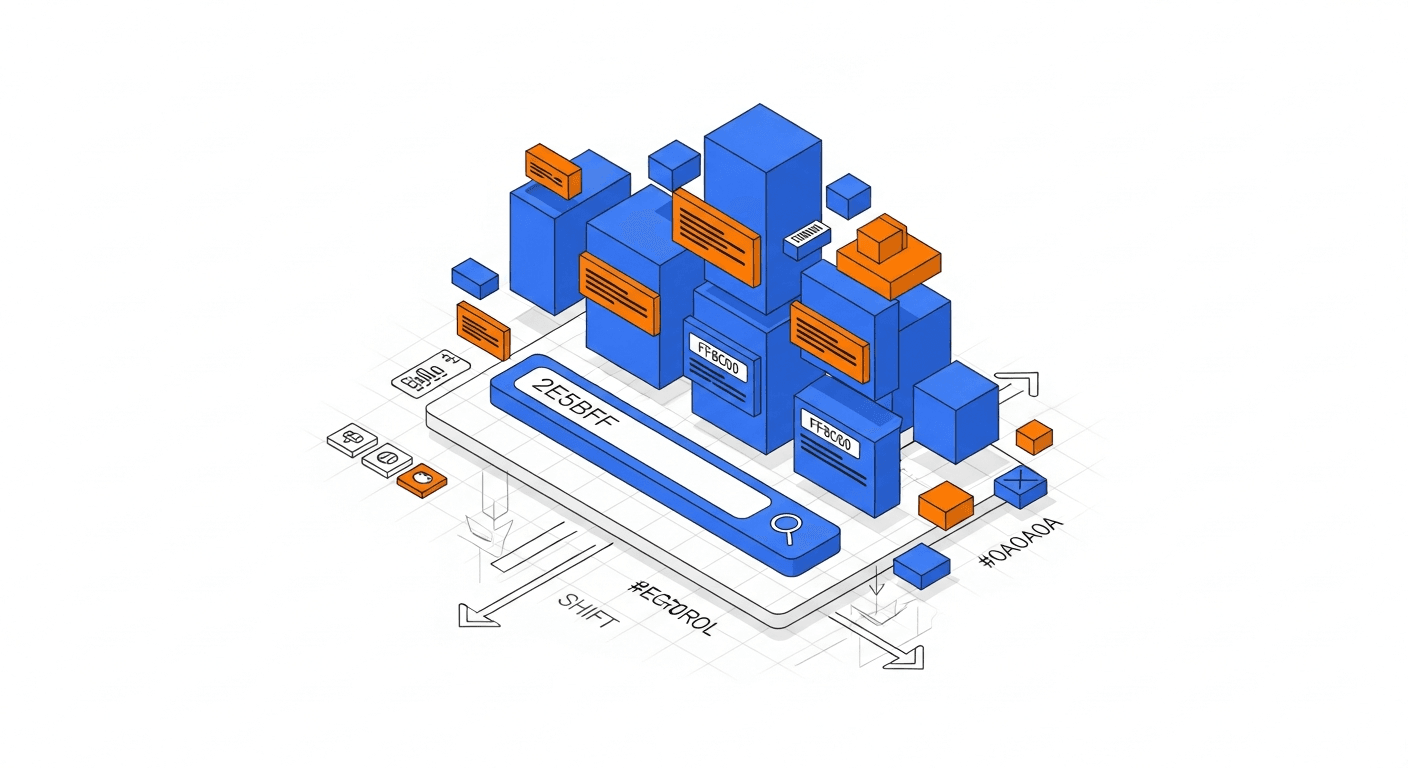
Here's what now occupies the top of SERPs on many queries:
- 4 Google Ads instead of the historical 2 or 3
- AI Overview: Google's AI-generated response block, often spanning 150 to 300 pixels in height
- Featured Snippets: optimized excerpts that directly answer the question
- People Also Ask: related questions that expand accordion-style
- Knowledge Panel: information inserts about recognized entities
- Local Packs: Google Maps results for local intent queries
- Shopping Results: product carousels for commercial queries
Result: on certain commercial queries, the first organic link only appears after 800 to 1200 pixels of scrolling. On mobile, that represents two to three complete screens.
The Numbers That Illustrate the Problem
According to recent analyses from Search Engine Journal and data compiled by tools like Semrush and Ahrefs, the situation is measurable:
- The average CTR of organic position 1 dropped from 28% in 2020 to about 19% in 2024 on desktop
- On queries with AI Overview, position 1 CTR plummets to less than 10%
- Zero-clicks (users finding their answer without clicking) now represent over 60% of Google searches
- Ads capture between 40% and 65% of clicks on high-intent commercial queries
This data means that an organic position 1 in 2025 generates significantly less traffic than a position 3 or 4 in 2018.
Why Your Position 1 Becomes Invisible: Three Key Factors
Factor 1: Google's Aggressive Monetization
Google generates over 80% of its revenue through advertising. Shareholder pressure to maintain growth pushes the company to maximize visible advertising space. The four ads at the top of the page, larger ad extensions, and enriched Shopping formats aren't accidents: they're product decisions aimed at increasing revenue per search.
For high commercial value queries—insurance, credit, B2B software, legal services—Google systematically displays the maximum number of authorized ads. Your organic position 1 is mechanically relegated below these paid blocks.
Factor 2: Generative AI as the New Interface
Google AI Overview, gradually launched since 2024, fundamentally changes the nature of SERPs. For informational queries and certain transactional queries, Google generates a synthetic response at the top of the page. This response may cite sources, but users often get the information they need without clicking.
This AI Overview block typically occupies between 200 and 400 pixels in height. It directly answers the posed question, making the organic results below less relevant for the time-pressed user. At AISOS, we observe that queries with AI Overview lose an average of 25% organic CTR compared to the same queries without this block.
Factor 3: Multiplication of SERP Features
Google has introduced over 30 types of enhanced features in its SERPs. Each feature addresses a specific user need, but each feature also pushes traditional organic links further down.
A concrete example: search for a query like "best accounting software SME". You'll probably see:
- 3-4 Google Ads with extensions
- An AI Overview block summarizing the options
- A People Also Ask block with 4 questions
- Possibly a carousel of product listings
The first organic result appears after all of this. Even if you're first, users must actively search for your link.
The Concrete Impact on Your Traffic and Conversions
Fewer Clicks Despite Better Rankings
Take a typical case: a French mid-market company specializing in HR solutions for SMEs. This company worked on their SEO for three years and now holds position 1 for "talent management software SME". In 2022, this position generated about 1,500 monthly visits. In 2025, the same ranking generates 650 visits.
Search volume hasn't decreased. User intent remains the same. But traffic dropped by 57% due to SERP Layout Shift. Ads and enhanced features now capture the majority of clicks and visual impressions.
Users Who Never See Your Brand
The problem goes beyond simple click loss. If your brand doesn't appear in the visible part of the screen, it doesn't enter user consideration. Users see advertisers, see Google's AI response, see related questions, then leave the page or click on an ad.
For SMEs and mid-market companies, this invisibility has direct consequences on:
- Brand awareness among prospects who never discover you
- Customer acquisition cost that increases as you must compensate through other channels
- Growing dependence on Google Ads to stay visible on your own keywords
Six Strategies to Stay Visible Despite Layout Shift
Strategy 1: Target Featured Snippets and Position Zero
If the first traditional organic result appears mid-page, Featured Snippets remain at the top. This direct answer block, also called position zero, displays above traditional organic results.
To capture Featured Snippets:
- Structure your content with direct answers of 40-60 words to key questions
- Use bullet points and comparison tables
- Place the answer immediately after the question in your content
- Target queries beginning with "how", "why", "what is"
Featured Snippets don't guarantee high CTR, but they ensure visibility above the fold.
Strategy 2: Optimize for AI Overview and Generative Engines
Google AI Overview, as well as responses from ChatGPT, Perplexity, and Gemini, cite sources to generate their answers. Being cited by these generative engines becomes a new form of visibility.
To appear in generative responses:
- Create factual content with verifiable data
- Structure your pages with clearly defined entities: product names, concepts, methods
- Publish content that comprehensively and structurally answers questions in your sector
- Maintain strong editorial authority: identified authors, cited sources, regular updates
This discipline is called GEO, Generative Engine Optimization. It complements traditional SEO by preparing your content to be used as sources by AI.
Strategy 3: Invest in Local SEO and Maps Packs
Google Maps results and the local three-pack often appear above or at the level of organic results. For businesses with physical presence or defined service areas, local SEO offers visibility protected from Layout Shift.
Priority actions:
- Fully optimize your Google Business Profile
- Actively collect customer reviews on Google
- Create dedicated local pages if you have multiple locations
- Work on local citations: professional directories, Yellow Pages, sector directories
Strategy 4: Diversify to Non-Google Channels
Excessive dependence on Google becomes a strategic risk. Smart leaders distribute their visibility investments across multiple channels:
- LinkedIn for B2B: expert content, articles, active presence
- YouTube: world's second search engine, less affected by Layout Shift
- Podcasts and webinars: content creation that generates direct audience
- Email marketing: building proprietary audience not dependent on algorithms
- ChatGPT, Perplexity, Claude: GEO optimization to appear in AI assistant responses
Strategy 5: Strengthen Brand to Generate Direct Searches
Brand searches, with your company name in the query, are less affected by Layout Shift. Google typically displays your site in dominant position when users specifically search for you.
To increase brand searches:
- Invest in awareness through PR and thought leadership
- Create memorable content associated with your brand
- Develop regular presence on B2B social networks
- Sponsor events or sector studies
A prospect who types your company name directly won't be diverted by competitor ads.
Strategy 6: Accept Tactical Use of Google Ads
This recommendation may seem paradoxical in an SEO article, but economic reality demands it. On certain high commercial value queries, organic position no longer suffices to capture significant prospect volume.
A hybrid approach consists of:
- Maintaining SEO efforts for long-tail traffic and informational queries
- Activating Google Ads strategically on high purchase-intent queries
- Measuring complete acquisition cost per channel to allocate budgets
AISOS audits often reveal that companies underestimate the share of their visibility captured by competitor ads. A query-by-query SERP analysis helps prioritize investments.
Measuring Your Real Visibility: Beyond Rankings
New Indicators to Track
Position tracking remains useful, but it's no longer sufficient. You must now measure:
- Pixel position: at what physical height does your link actually appear?
- Featured Snippet presence: are you in position zero?
- AI citations: do you appear in AI Overview responses, ChatGPT, Perplexity?
- Real CTR by position: what percentage of impressions generate clicks?
- Brand traffic: what share of your traffic comes from searches including your name?
Analysis Tools and Methods
Several tools allow auditing your real SERP visibility:
- Google Search Console: CTR by query and page
- Semrush or Ahrefs: analysis of SERP features occupied by your competitors
- Automated SERP captures: tools like SERPChecker or regular manual visualizations
- AI citation tracking: manual searches on ChatGPT and Perplexity for your target queries
The goal is to move from a "I'm first" vision to a "I'm visible and clicked" vision.
Conclusion: Adapting Your Strategy to the New Reality
SERP Layout Shift isn't a passing trend. It's a structural transformation of how Google monetizes and organizes its results. Organic position 1, once the holy grail of SEO, becomes one indicator among others of your online visibility.
For SME and mid-market leaders, this evolution requires three adaptations:
- Diversify visibility sources beyond organic Google
- Optimize for new visibility positions: Featured Snippets, AI Overview, local packs
- Measure real visibility rather than theoretical rankings
SEO remains relevant, but it must be part of a global visibility strategy that integrates GEO, local SEO, brand building and, when necessary, targeted advertising investment.
Want to know where your company actually appears in SERPs and in generative engine responses? AISOS offers a comprehensive visibility audit that measures your presence on Google, ChatGPT, Perplexity and other interfaces where your prospects search for solutions. Contact us for an analysis of your situation.


