Wikipedia is ChatGPT's #1 source. Should you create your page?
47.9% of the most cited sources by ChatGPT come from Wikipedia. But creating a Wikipedia page is neither simple nor always possible. Alternatives and strategy.

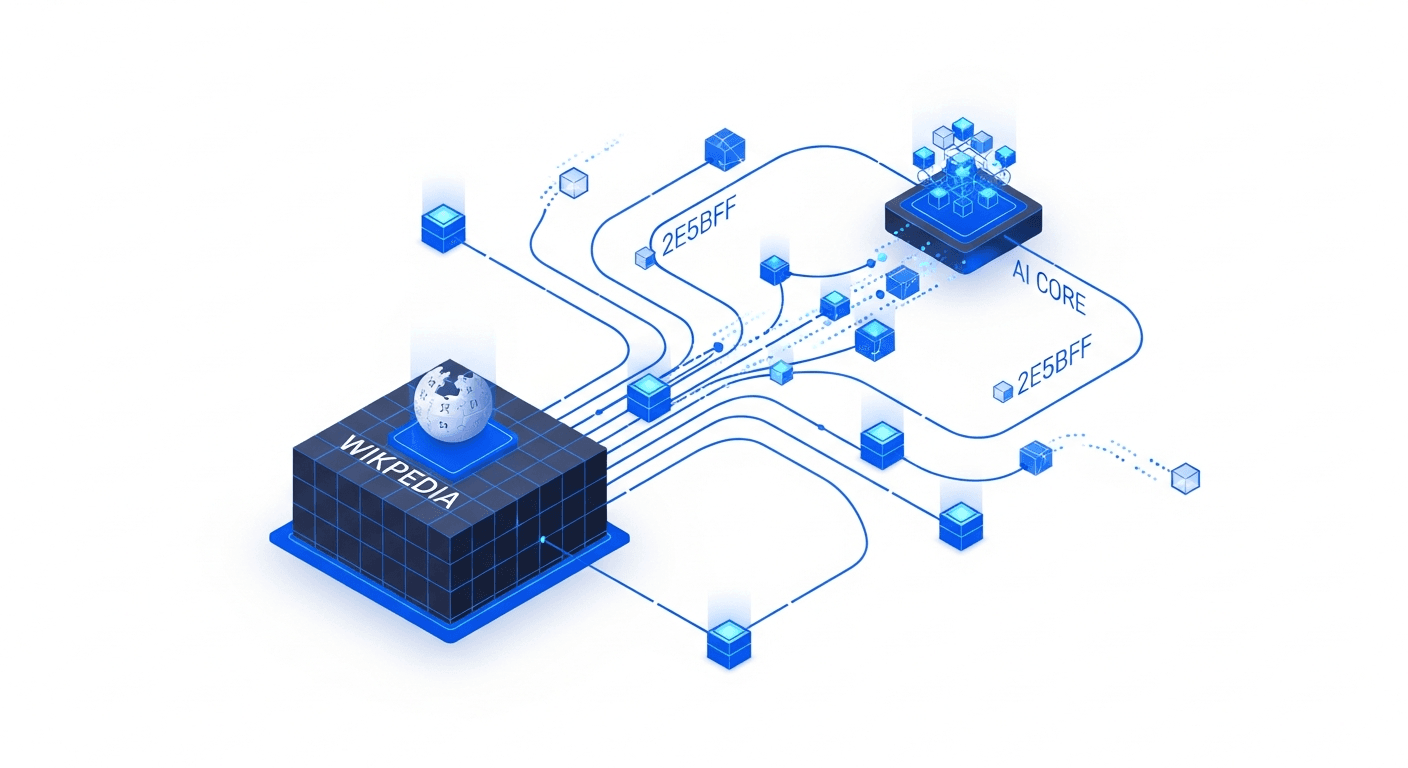
When you analyze the sources that ChatGPT cites most often, one name crushes everything else: Wikipedia, with 47.9% of top sources according to the Profound study from January 2026.
This number caused a minor panic among some of our clients. "We need a Wikipedia page!" Not so fast.
Why ChatGPT cites Wikipedia so much
ChatGPT (and GPT-4 in general) was trained on a massive corpus of web texts. Wikipedia occupies a disproportionate place, and for good reason: it's the most comprehensive, most structured, and most regularly updated encyclopedia on the web. Millions of articles, in hundreds of languages, with verifiable sources.
For an LLM, Wikipedia is a dream. Each article follows a predictable structure. Information is sourced. Data is factual. It's the ideal training ground.
Result: when ChatGPT has to recommend a company, a concept, or a tool, it relies heavily on what it "read" on Wikipedia. If your company appears there with a complete article, you have a considerable advantage.
The problem: you probably can't have a Wikipedia page
Wikipedia has strict notability criteria. For a company to have its own page, it must demonstrate significant coverage in reliable, independent secondary sources. In plain terms: press articles, academic studies, mentions in books -- not your own blog or press releases.
For a Belgian SME of 20 people generating 2 million in revenue? Nearly impossible. And trying to create a page that doesn't meet the criteria is even worse: it will be deleted, and your brand will be associated with a manipulation attempt. Wikipedia editors have long memories.
We've seen agencies offer "Wikipedia page creation" as a service. Be wary. If your company doesn't meet the notability criteria, no agency in the world can bypass Wikipedia's rules without risk.
Companies that can (and should) have a page
Some companies are eligible without knowing it. If you check at least two of these boxes, it's worth exploring:
You've been covered by national or international media (not advertorials). Your company has been mentioned in published market studies (Gartner, Forrester, IDC). You've received recognized awards in your industry. Your revenue or size makes you a notable player in your industry. You have a story or innovation documented by third parties.
If that's your case, investing in a properly sourced Wikipedia page is one of the best AI visibility investments you can make.
For everyone else: alternatives that work
The good news is that Wikipedia isn't the only path to ChatGPT. The remaining 52.1% of cited sources come from elsewhere. And that's where SMEs have cards to play.
Wikidata. It's the structured database behind Wikipedia. Even if you don't have a Wikipedia page, you can have a Wikidata entry. It's easier to create, criteria are less strict, and LLMs query Wikidata directly. Creating a clean Wikidata entry for your company (with the right identifiers, sector, and data) is a quick win.
Contributing to Wikipedia without creating your page. You're an expert in a field? Improve existing Wikipedia articles in your sector. Add reliable sources. Correct outdated information. Over time, your name (and your company's) can appear as a source in established articles. That's pure GEO.
Industry directories and databases. Crunchbase, LinkedIn Company, professional Belgian directories (Trends Top, BEL-FIRST), industry registries. ChatGPT relies on all these sources to cross-reference information.
Specialized press. An article in a respected business publication mentioning your company has a dual effect: it strengthens your future Wikipedia eligibility AND directly feeds the LLMs.
The strategy we recommend for European SMEs
We've worked with about fifteen Belgian SMEs on this specific question. Here's the playbook we apply.
First month: create a clean, complete Wikidata entry. Check and enrich all existing profiles (Crunchbase, LinkedIn, directories). Ensure information is consistent everywhere -- same name, same description, same data.
Second and third month: produce citable content. Detailed case studies, original data about your industry, quantified analyses. The kind of content a journalist or Wikipedia editor could use as a source.
In parallel: develop press relations. Not for classic SEO (the links), but for independent editorial coverage. A press article mentioning your company is worth more for AI visibility than 50 blog backlinks.
Sixth month: evaluate Wikipedia eligibility. If press coverage is sufficient, consider creating a page. If not, keep building.
A shortcut nobody mentions
There's an aspect most guides ignore: your industry's Wikipedia pages. You may not have your own page, but your industry does. The article "Fintech in Belgium" or "SaaS market" may exist -- and your company could be mentioned as an example.
It's subtle, but when ChatGPT generates a response about Belgian fintechs, it looks in the industry's Wikipedia article. If your name appears there (with a reliable source), you're in the response.
We're not telling you to edit Wikipedia yourself. The conflict of interest rules are clear. But you can provide reliable sources (press articles, studies) to Wikipedia editors working on these industry articles.
AI visibility isn't built in a day. But every brick you lay -- Wikidata, press, directories, industry contributions -- strengthens your presence in ChatGPT's responses. Wikipedia is the top of the pyramid. Start with the base.
Co-founder and COO of AISOS. GEO Expert, he builds the AI visibility system that turns businesses from invisible to recommended.


