41% of ChatGPT's recommendations come from 'top 10' articles. Here's how to leverage that.
Listicle-style articles are ChatGPT's favorite source for product recommendations. The data, the strategy, and how to get your brand included.

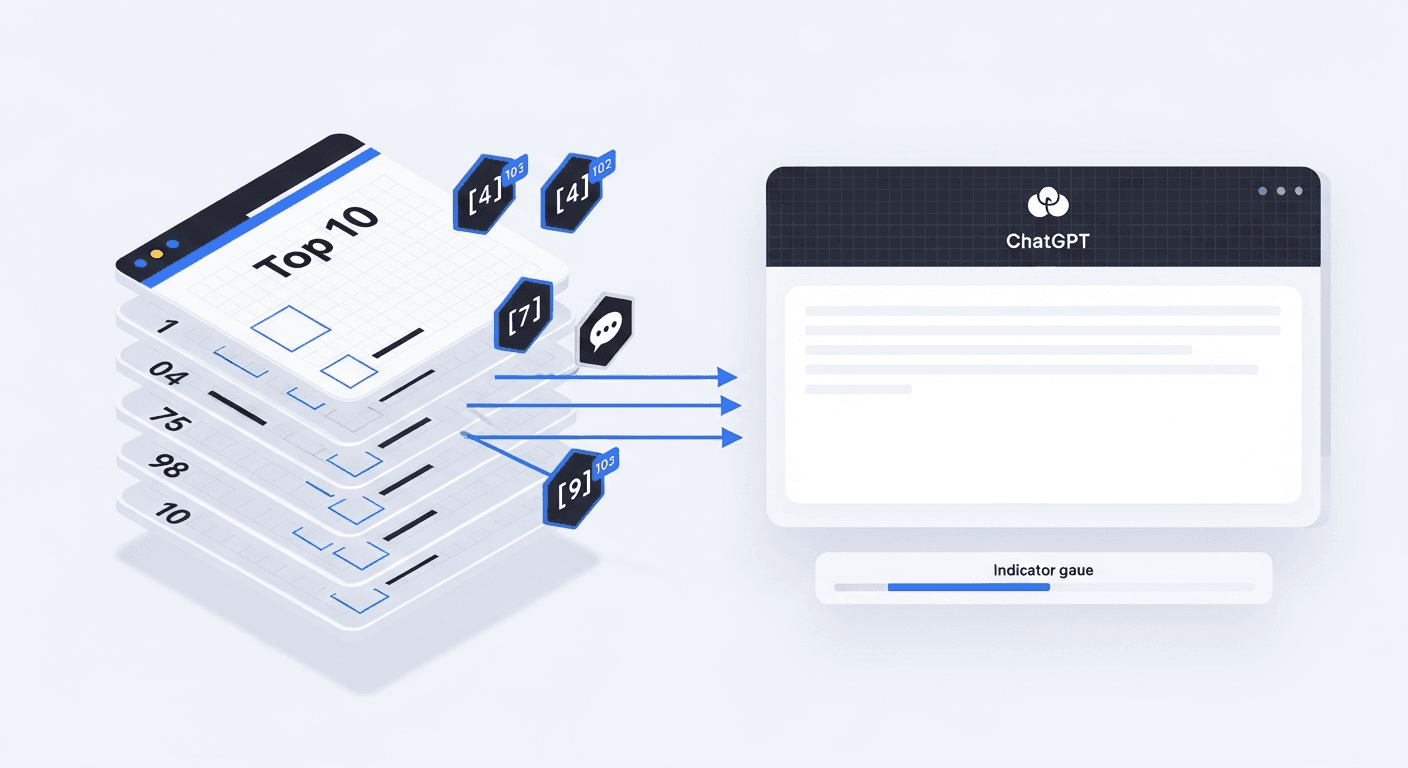
When ChatGPT recommends a tool or a service, where does the recommendation come from? We analyzed this with our AI visibility monitoring tools, and one pattern stood out: 41% of ChatGPT's product recommendations reference or derive from "top 10," "best of," or "alternatives to" listicle articles.
That's not surprising when you think about it. These articles are specifically designed to answer the question "what should I use?" -- which is exactly the type of question people ask ChatGPT.
Why listicles dominate AI recommendations
Listicle articles have three properties that make them LLM-friendly:
They're structured. Lists with product names, features, pricing, and pros/cons are easy for a model to parse and reproduce. The information is already in the format ChatGPT wants to output.
They're comparative. Instead of learning about one product, the model learns about 5-10 products in context. It understands relative positioning, which is exactly what it needs to make a recommendation.
They're from trusted sources. G2, Capterra, industry blogs, tech publications -- the sites that publish listicles tend to have high domain authority and editorial standards. LLMs trust these sources.
The two strategies
There are two ways to benefit from this insight, and you should pursue both.
Strategy 1: get included in existing listicles. Identify the "best of" and "alternatives to" articles in your category that rank on Google. These are the articles feeding ChatGPT. Contact the authors or publications. Many accept submissions or additions, especially if you provide a well-written paragraph about your product. This is targeted digital PR with a direct AI visibility payoff.
We did this for a Belgian fintech client. They identified 20 "alternatives to Stripe for Europe" articles, contacted each one, and got added to 7. Within 3 months, ChatGPT started including them in relevant recommendations.
Strategy 2: create your own listicle (done right). Publish a comparison article on your blog: "Best [category] tools for [audience] in 2026." Include your product alongside competitors. Be honest about strengths and weaknesses for each.
Why include competitors? Because an honest comparison gets cited by LLMs. A dishonest one ("we're the best at everything") gets ignored. The model cross-references sources -- if your comparison contradicts every other one, it won't trust yours.
The anatomy of a listicle that gets cited
Not all listicles are created equal. The ones that feed ChatGPT most effectively share these characteristics:
Clear structure: H2 headings for each product, consistent format (description, pros, cons, pricing, ideal user).
Specific data: actual pricing, feature lists, user counts, review scores. Vague descriptions get filtered out.
Regular updates: articles updated in 2026 get cited more than stale 2023 content. Add a "last updated" date and actually update the content.
Author credibility: signed by someone with verifiable expertise. Industry journalists, product reviewers, practitioners.
Practical steps for this month
Week 1: Google "[your category] + best tools/alternatives/comparison." Make a list of the top 20 articles. Note which ones include your product and which don't.
Week 2: For articles that don't include you, draft a submission. One paragraph about your product: what it does, pricing, ideal user, what makes it different. Professional, factual, not salesy.
Week 3: Send personalized outreach to 15 article authors/editors. Expect a 20-30% positive response rate.
Week 4: Publish your own comparison article. Include 5-7 competitors alongside your product. Be genuinely useful to someone researching the category.
The 41% stat isn't going away. If anything, as more people use AI for product research, listicles will become even more influential in shaping recommendations. Being included in them isn't optional anymore -- it's a core component of AI visibility strategy.
Co-founder and COO of AISOS. GEO Expert, he builds the AI visibility system that turns businesses from invisible to recommended.


