Is SEO Dead Because of AI? A Cold Analysis of a Debate Going in Circles
Every few months the same thread explodes: "SEO is dead because of AI." Here is an unsparing look at what the data actually shows in 2026 — and what is truly dying versus what is transforming.

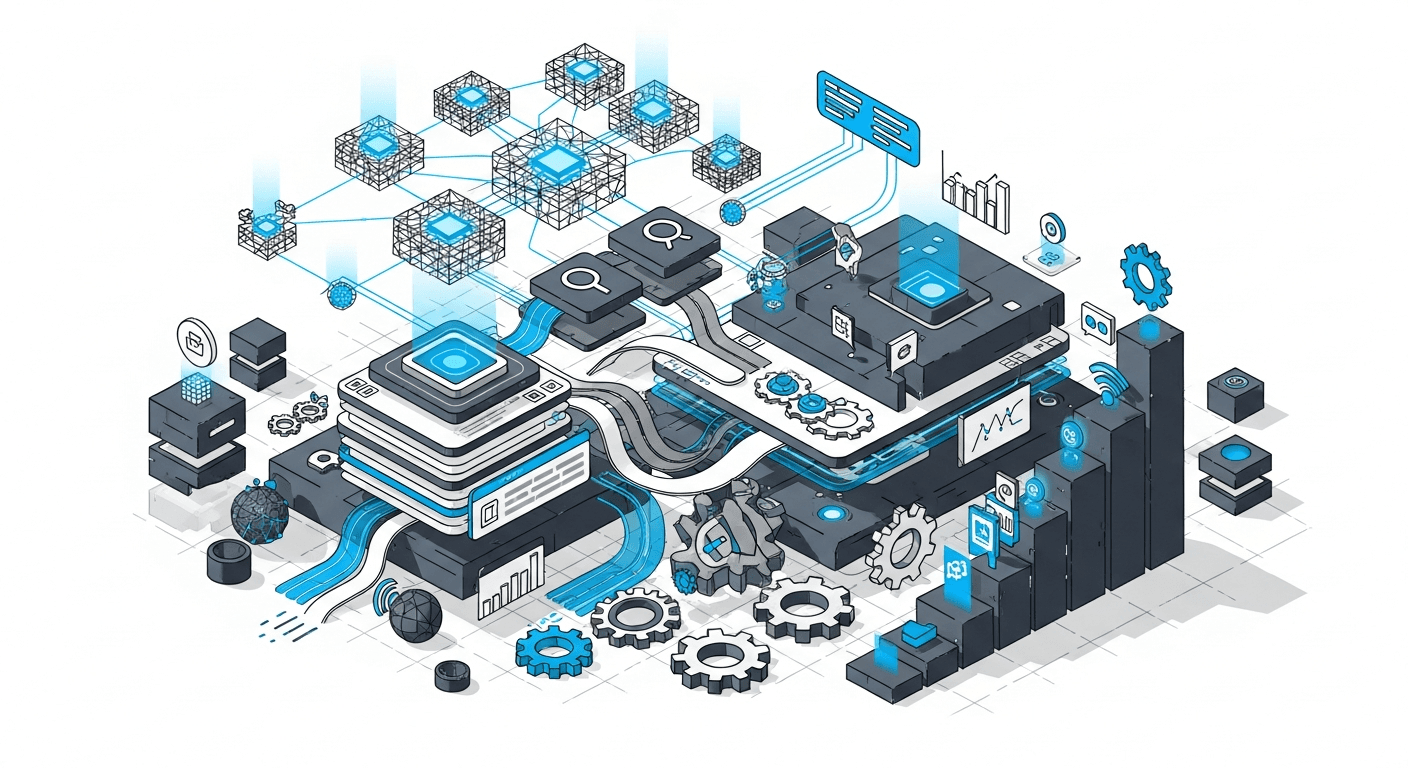
Every three months, the same thread explodes on Reddit: "SEO is dead because of AI." Comments split into two camps. On one side, catastrophists convinced that ChatGPT killed Google. On the other, optimists repeating that "SEO is transforming, not dying." And between the two, silence: the silence of the numbers.
After combing through dozens of discussions on r/SEO, r/AskMarketing, r/Blogging, and r/digital_marketing, here is an unsparing analysis of what is actually happening in 2026.
The Reddit Debate: A Mirror of Market Confusion
The topic returns with near-seasonal regularity. On r/SEO, a recent post asks: "Starting my SEO career in 2026 — is it worth it with AI? Feeling lost." Responses oscillate between two extremes.
Camp 1 — SEO is finished:
"AI is killing SEO, that's just the way it is. Now they take our content and make it their own. Without sending traffic or even naming us as the source."
This camp points to a real problem: AI search engines synthesize answers without necessarily sending users back to the source. Organic traffic, the central mechanism of SEO for 20 years, is being short-circuited.
Camp 2 — SEO is transforming:
"The 'AI is killing SEO' take gets louder every few months and it hasn't really played out that way. Instead, it's the low effort side of SEO that's dying."
This camp is also right. SEO has not disappeared overnight. What is disappearing is a certain type of SEO — the kind built on volume, technical tricks, and assembly-line content.
A third current emerges, more interesting. A user on r/SEO proposed an acronym: DEOD — Discovery Engine Optimization Driven. The idea: we are no longer trying to "rank" on a search engine, but to be discovered by recommendation and AI engines.
This is not a binary debate. It is a mutation.
The Real Numbers: What the Data Says in 2026
Enough opinion — let's look at the facts.
Organic Traffic Is Declining, But Not Collapsing
According to aggregated data from Similarweb and Sparktoro (Q1 2026), organic traffic via Google has declined approximately 15 to 20% on informational queries compared to 2023. However, transactional and navigational queries remain relatively stable.
What this means: if your business depends on generic "how to do X" articles, you have already lost. If you sell a product or service with clear purchase intent, classic SEO still works — for now.
AI Overviews: Position Zero Cannibalizes Everything
Google AI Overviews (formerly SGE) is now present on more than 40% of queries in English and approximately 25% in French. When an AI Overview appears, the click-through rate on the first organic result drops by 30 to 60% depending on query type (Source: Advanced Web Ranking, February 2026).
Classic position 1 is no longer the dominant position. The dominant position is the AI-generated answer at the top of the page.
AI Engines Cite Their Sources — Sometimes
ChatGPT (with Browse), Perplexity, and Gemini cite sources in their answers. But the reality is nuanced:
- Perplexity systematically cites with clickable links — the most transparent.
- ChatGPT cites in approximately 60 to 70% of cases when using search mode, but links are often minimally visible.
- Gemini cites variably depending on context.
Being cited by an AI engine is the new "position 0." But unlike classic SEO, there is no standardized method yet to guarantee this visibility.
What Is Actually Dying (and No One Should Mourn)
Let's be precise. SEO is not dying. Here is what is dying:
1. Mediocre Content Produced at Scale
Articles of 2,000 words written to satisfy an algorithm, stuffed with keywords, with a clickbait title and zero added value — that is over. AI engines have no reason to cite an article that repeats what 500 others already say.
2. Content Farms and Parasite SEO
"Parasite SEO" (publishing on high-authority domains to leverage their PageRank) is fading. Google severely penalized this practice in 2025. AI engines evaluate content relevance, not host domain authority.
3. The "Produce More = Rank More" Model
For years, the dominant strategy was: publish 50 articles per month, cover all keyword variations, build a massive semantic silo. This model no longer works when AI can synthesize the information from 50 articles into a single answer.
4. SEO Without Brand
If no one knows your name, no AI engine will cite you. LLMs have a massive bias toward recognized entities — brands mentioned frequently on the web, experts cited on Reddit, LinkedIn, or in the press. Anonymous SEO is dead.
What Is Emerging: AI Visibility
As classic SEO contracts, a new territory opens. Here are the strong signals.
The Notion of "Citability"
AI engines do not rank pages — they synthesize answers from sources they consider reliable. To be cited, your content must be:
- Specific: numbers, concrete cases, proprietary data
- Structured: schemas, lists, clear definitions that AI can extract
- Authoritative: published by a recognized entity, cited by other sources
The Prompt Recall Rate (PRR)
An emerging metric: what percentage of queries relevant to your category leads to a mention of your brand in AI answers? This is the new equivalent of "share of voice" in SEO. Today, most SMBs have a PRR of 0%.
Distributed Authority Signals
LLMs build their "knowledge" from the entire web, not just your site. Your presence on Reddit, LinkedIn, Medium, Quora, specialized forums — all of this feeds the probability of being cited. On-page SEO is no longer enough. You need a distributed presence strategy.
AI-First Content
Writing for a human AND for an AI means:
- Rigorous structured data (Schema.org)
- A
llms.txtfile on your site (the newrobots.txtfor AI crawlers) - Direct answers to questions, not 300-word introductions before getting to the point
- Content that brings a unique perspective, not a Wikipedia reformulation
How to Adapt Concretely in 2026
No panic, no denial. Here is a realistic action plan.
1. Audit Your Current AI Visibility
Ask the right questions to ChatGPT, Perplexity, and Gemini about your sector. Does your brand appear? If not, you have an urgent problem — not in 2 years, now.
2. Fix the Technical Fundamentals
Schema markup, clean architecture, load times, no noindex on your strategic pages, complete metadata. Technical SEO basics remain the foundation — they serve both classic crawlers and AI crawlers.
3. Build Distributed Authority
Be present where LLMs learn: Reddit (with authentic contributions, not spam), LinkedIn (regular, positioned content), sector forums, specialized publications.
4. Shift from Volume to Value
One article with proprietary data, a strong point of view, or a detailed case study is worth more than 20 generic articles. AI engines look for sources they cannot replace, not sources they can summarize in two sentences.
5. Measure Your PRR
Track how often your brand is cited in AI answers for your target queries. This is your new visibility KPI — complementing organic traffic, not replacing it.
The Verdict: Transformation, Not Extinction
SEO is not dead. But SEO as practiced for 15 years — content production at scale, ranking obsession, artificial backlinks — that version is in terminal decline. And that is good news for companies that actually have something to say.
What is emerging is an ecosystem where visibility plays out simultaneously on two fronts: classic search engines (still relevant for transactional queries) and AI engines (dominating informational and discovery queries).
The companies that will survive this transition are those who understand it is no longer about "doing SEO" but about building AI visibility — a mix of specific content, distributed authority, solid technical fundamentals, and continuous measurement.
That is exactly what AISOS does. Our platform audits your visibility on both classic search engines AND AI engines (ChatGPT, Perplexity, Gemini), fixes structural gaps, and deploys an AI-first content strategy with PRR tracking. If you want to know where you stand, request a free audit.
FAQ
Is classic SEO still useful in 2026?
Yes, for transactional and navigational queries. If someone searches "buy [your product]" or "[your brand] review," classic SEO remains relevant. However, for informational queries ("how to choose a B2B CRM"), AI Overviews and AI engines are capturing a growing share of traffic. The optimal approach combines classic SEO and AI visibility.
Will AI engines replace Google?
Not in the short term. Google remains the dominant entry point for the majority of searches. But Google itself is integrating AI into its results (AI Overviews). The question is not "Google vs ChatGPT" — it is "classic results vs AI-generated answers," and that battle is playing out inside Google itself.
How do I know if my company is visible on AI engines?
Test manually: ask ChatGPT, Perplexity, and Gemini questions your customers would ask about your sector. Note whether your brand is mentioned, cited, or recommended. For systematic analysis, an AI visibility audit (like the one offered by AISOS) measures your Prompt Recall Rate and identifies priority actions.
Should I stop investing in SEO to focus on AI?
No. You need to broaden your strategy, not pivot it. Technical SEO remains the foundation (it also serves AI crawlers). Quality content remains essential (it is what AIs cite). What changes is adding an AI visibility layer: distributed authority signals, AI-first content, Schema.org, llms.txt, and PRR tracking. This is an evolution, not a revolution.
Co-founder and COO of AISOS. GEO Expert, he builds the AI visibility system that turns businesses from invisible to recommended.


