Sam Altman Raises Concerns About Dead Internet Theory: SEO and AI Impact
Sam Altman warns of a web saturated with AI-generated content. Analysis of the concrete consequences for business visibility and SEO strategies.

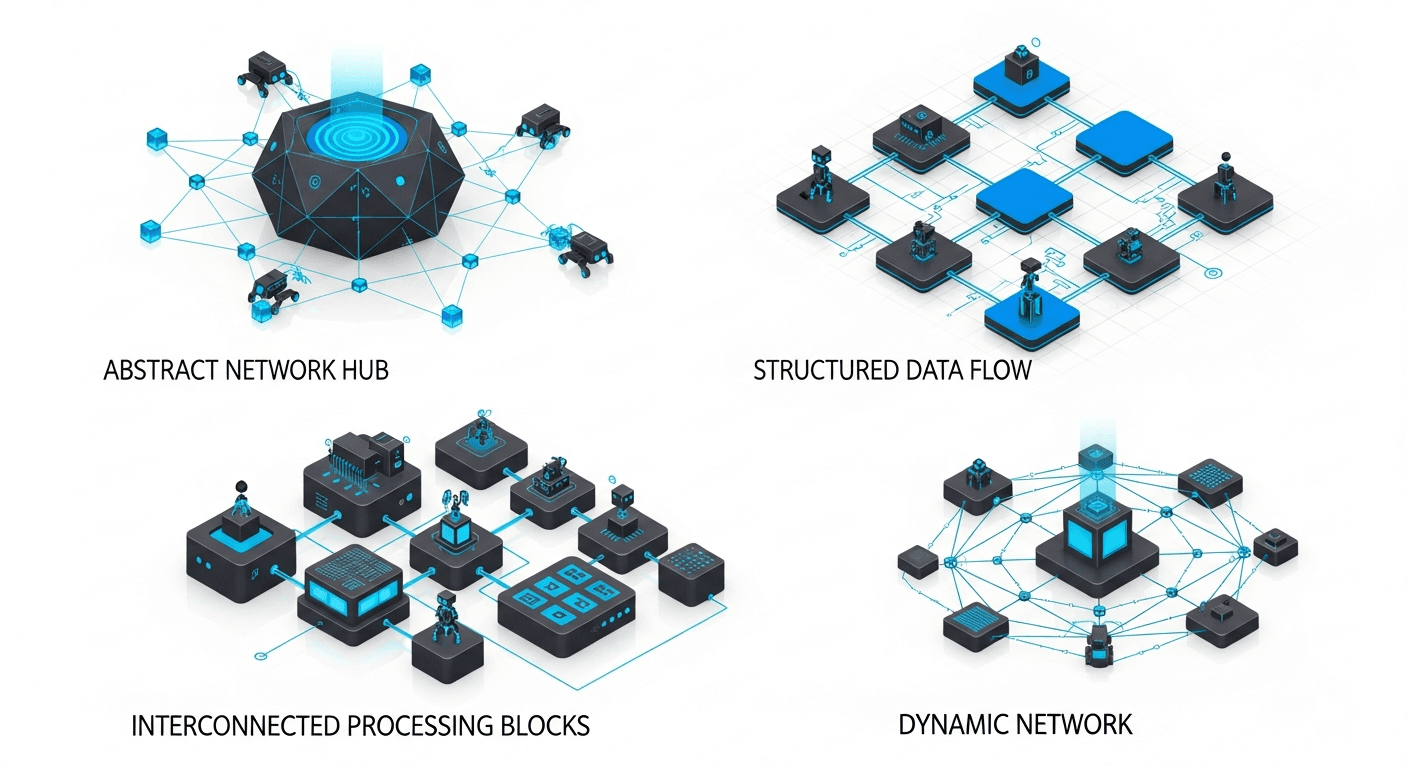
In May 2025, Sam Altman sent shockwaves through the tech community. The OpenAI CEO declared on X that he was "suddenly worried that the Dead Internet Theory is becoming reality." This theory, long considered a conspiracy curiosity, describes an internet where the majority of content would be generated by bots and AI, drowning out authentic human contributions.
For SMB and mid-market leaders, this statement is far from anecdotal. It signals a major paradigm shift in how companies will need to make themselves visible online. When the founder of ChatGPT himself raises alarms about the proliferation of synthetic content, it's a warning signal for any digital visibility strategy.
This article breaks down what the Dead Internet Theory concretely means for your business, how it's already transforming SEO rules, and which strategies to adopt so your expertise remains visible in an ocean of automated content.
The Dead Internet Theory: from conspiracy theory to business reality
The Dead Internet Theory emerged around 2016 on forums like 4chan. It postulated that the majority of web traffic and content was already generated by bots, automated content farms, and state actors. Authentic humans had supposedly become a minority in online interactions.
For years, this theory was considered exaggerated. Then ChatGPT arrived in November 2022. In two years, the volume of AI-generated content has exploded exponentially.
The numbers that validate Altman's concern
- 57.1% of the web is now machine-translated according to a 2024 Amazon Web Services study
- Originality.ai estimates that 15-20% of new content indexed by Google is AI-generated
- NewsGuard identified over 1,000 fully automated news sites in 2024
- Bot-generated comments represent up to 40% of interactions on certain social platforms
Sam Altman isn't talking about a hypothetical future. He's observing an already measurable trend. His concern centers on acceleration: each new version of GPT makes synthetic content production easier, less expensive, and harder to distinguish from human content.
Why the OpenAI CEO worries about his own creation
Altman's position may seem paradoxical. OpenAI created the tools that fuel this proliferation of synthetic content. But his concern reveals an awakening: if the internet becomes a space where humans can no longer distinguish truth from falsehood, authentic from synthetic, the entire ecosystem degrades.
For search engines and generative engines like ChatGPT itself, this is an existential problem. A language model trained on content that's predominantly AI-generated ends up self-referencing. Experts call this phenomenon "model collapse": a progressive degradation in response quality.
Direct impact on SEO: the end of volume strategies
For companies that relied on massive content production to dominate SERPs, the alarm signal is clear. Google, Bing, and generative engines are adjusting their algorithms to counter the influx of low-value synthetic content.
Search engine responses
Google deployed several major updates in 2024 and 2025 specifically targeting low-quality AI content:
- March 2024 Core Update: deindexing of fully AI-generated sites, 40% reduction in spam content according to Google
- Helpful Content System: penalization of sites massively publishing content without original added value
- E-E-A-T reinforcement: increased priority on demonstrated expertise, verifiable experience, established authority
At AISOS, we observe that sites outperforming in this new context share a common characteristic: they demonstrate expertise that AI cannot simulate. Verifiable customer testimonials, use cases specific to their sector, proprietary data, strong viewpoints owned by identified authors.
The AI content paradox: easier to produce, harder to surface
The democratization of content generation tools has created a cruel paradox for businesses. Producing content has never been easier. Making it surface in results has never been harder.
A generic article on "marketing trends 2025" can be produced in 30 seconds by any competitor. Result: thousands of nearly identical content pieces compete for the same positions. Search engines, overwhelmed, favor established trust signals: domain history, quality backlinks, measurable user engagement.
For SMBs and mid-market companies, this evolution is double-edged. The barrier to entry for publishing collapses, but the barrier to visibility rises considerably.
GEO and generative engines: the challenge of AI citation
The Dead Internet Theory takes on an additional dimension with the rise of generative search engines. ChatGPT, Perplexity, Google AI Overview, Gemini: these tools don't just index content. They synthesize it and cite their sources.
How LLMs select their sources
Large language models don't function like traditional search engines. They don't rank pages: they construct responses by relying on sources they deem reliable and relevant.
Observed selection criteria:
- Topical authority: has the site covered this topic in depth and for a long time?
- Entity consistency: is information structured to be understood without ambiguity?
- Contextual freshness: for current topics, recent content is prioritized
- Differentiation: does the content bring a unique perspective or repeat what already exists?
In a web saturated with similar synthetic content, LLMs tend to cite sources that stand out. An original viewpoint, exclusive data, or specialized sector expertise become major competitive advantages.
The risk of total invisibility
For B2B companies, not being cited by generative engines represents a growing risk. Decision-makers increasingly use ChatGPT and Perplexity for preliminary research. If your company doesn't appear in these responses, you're invisible at the crucial moment when a prospect identifies their options.
The Dead Internet Theory aggravates this risk. The more the web fills with generic content, the more aggressively LLMs must filter. Companies without strong distinctive signals disappear from the radar.
Concrete strategies for SMBs and mid-market companies
Facing this new context, companies have clear action levers. The goal isn't to fight AI, but to strategically differentiate from it.
Focus on non-reproducible expertise
Content that AI cannot generate remains your best asset:
- Proprietary data: customer surveys, sector benchmarks, installed base analyses
- Documented experience feedback: detailed case studies with verifiable metrics
- Assumed editorial positions: strong viewpoints, signed by identified experts from your company
- Field content: customer interviews, video testimonials, reports on your interventions
This content costs more to produce than AI-generated articles. But it generates disproportionate value in terms of visibility and credibility.
Structure for generative engines
GEO (Generative Engine Optimization) requires specific practices:
- Explicitly name entities: "AISOS, a GEO-specialized agency based in Paris" rather than "our agency"
- Formulate direct statements: LLMs cite precise declarative sentences more easily
- Structure in self-sufficient sections: each block must be understandable in isolation
- Include sourced numerical data: precise statistics reinforce credibility in LLMs' view
Strengthen trust signals
In a web polluted by synthetic content, traditional trust signals become even more valuable:
- Backlinks from authoritative sites: recognized media, institutions, established partners
- Executive and expert presence: active LinkedIn profiles, press appearances, conferences
- Verified customer reviews: Google Business Profile, sector platforms
- Brand mentions: citations in independent editorial contexts
What the Dead Internet Theory changes for your digital strategy
The concern expressed by Sam Altman marks a turning point. It formalizes what SEO professionals have observed for 18 months: content volume is no longer an advantage—it's a handicap if that content doesn't stand out.
Tomorrow's winning companies
AISOS audits reveal a typical profile of companies maintaining or improving their visibility despite saturation:
- They publish less, but better: 2-4 in-depth pieces per month rather than 20 superficial articles
- They involve their internal experts: content is signed, embodied, engaged
- They document their real activity: client cases, field data, experience feedback
- They invest in relationships: press, partnerships, sector ecosystem
Mistakes to avoid
Certain reactions to the Dead Internet Theory are counterproductive:
- Producing even more AI content to "compensate": this amplifies the problem, doesn't solve it
- Abandoning SEO: search engines remain the primary acquisition channel for B2B
- Ignoring generative engines: their share in the B2B buying journey grows 15-20% per quarter
- Waiting for things to stabilize: advantage goes to early adapters
Conclusion: transforming threat into opportunity
The Dead Internet Theory, validated by Sam Altman's own concern, redefines the rules of online visibility. For SMBs and mid-market companies, it's a challenge but also an opportunity. Large enterprises with their armies of generic content lose their volume advantage. Authentic expertise, field knowledge, documented customer relationships become the new differentiation factors.
Companies that succeed in this new context will be those that embrace their uniqueness. A strong viewpoint beats ten consensus articles. A detailed client case beats a hundred generic content pages. Proprietary data beats a thousand reformulations of public statistics.
The question for each leader is no longer "how do I produce more content?" but "how do I prove that my company brings value that AI cannot simulate?" This question will determine visibility in the coming years, both in traditional search engines and in generative AI responses.


