ChatGPT Crawls 3x More Than Googlebot: How to Adapt Your SEO
ChatGPT-User surpasses Googlebot in crawling frequency. Discover concrete strategies to get indexed and cited by generative search engines.

The Silent Shift: ChatGPT Surpasses Google in Crawling
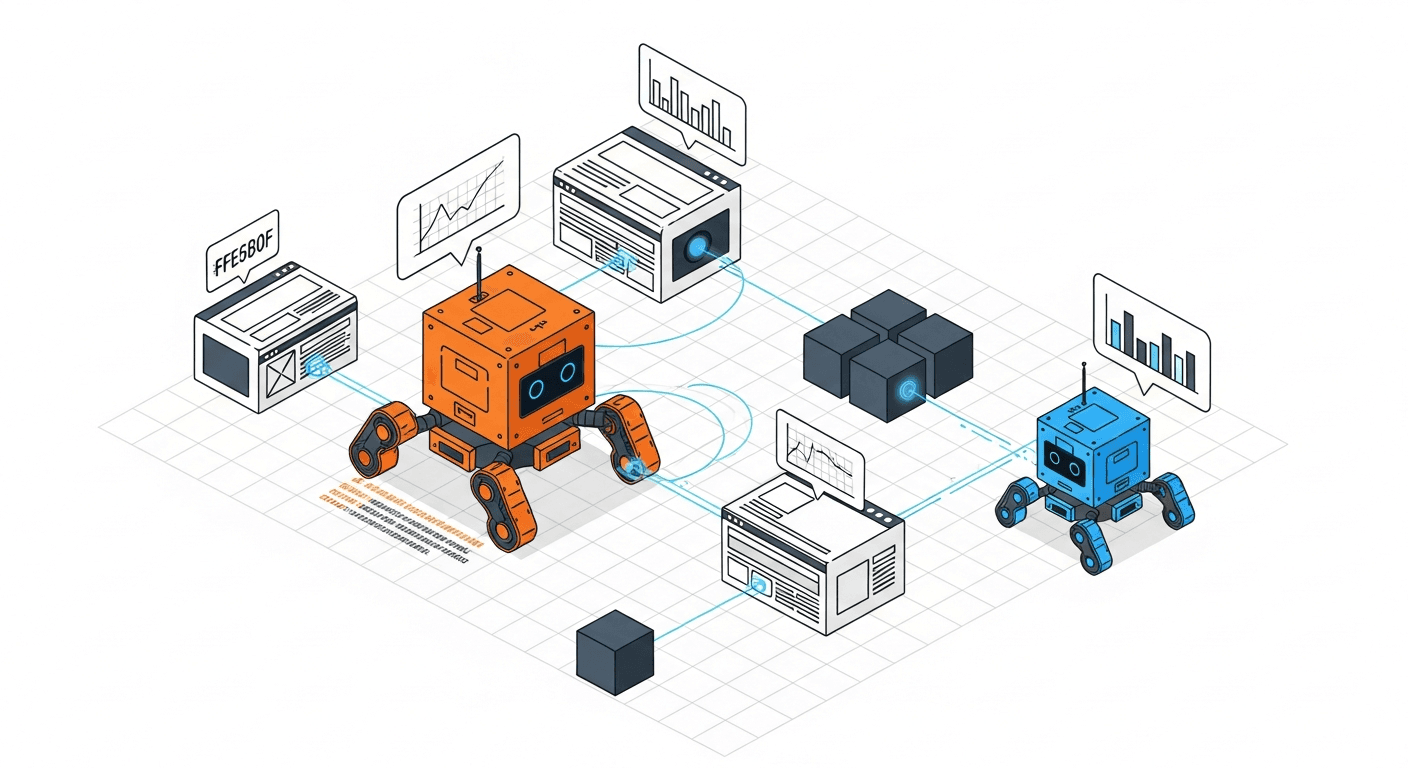
A study published in May 2025 by Vercel, based on analysis of 24 million bot requests, reveals a major shift in the SEO ecosystem. The ChatGPT-User crawler now performs 3.6 times more requests than Googlebot. This is no longer an emerging trend—it's a paradigm shift.
For SME and mid-market company leaders, this data has immediate strategic implications. Your website is no longer just a showcase indexed by Google. It's becoming an information source that artificial intelligences consult to generate answers for millions of users. The question is no longer whether you need to adapt, but how to do it before your competitors.
This article analyzes the Vercel report data, explains what this shift means for your online visibility, and proposes concrete strategies to transform this evolution into a competitive advantage.
What 24 Million Analyzed Requests Reveal
The Rise of AI Crawlers
The Vercel study measured the activity of major bots across a massive sample of websites. The results are unambiguous:
- ChatGPT-User represents the dominant share of bot traffic, with 800% growth between January and May 2025
- Googlebot maintains stable activity but finds itself surpassed in gross request volume
- Bytespider (TikTok), ClaudeBot (Anthropic) and PerplexityBot complete the top 5 most active crawlers
This distribution reflects a change in how information flows across the web. Generative engines no longer just index—they extract, analyze and reformulate content to directly answer user questions.
Why This Acceleration Now
Several factors explain this explosion in AI crawling:
- Web browsing integration in ChatGPT: since browsing mode was activated by default, every conversation can trigger requests to external sites
- The race for data freshness: LLMs must update their knowledge in real-time to remain relevant for current event queries
- Increasing user base: ChatGPT has over 200 million weekly users, each potentially generating crawls
At AISOS, we observe that sites that haven't anticipated this evolution see their content ignored by generative responses, even when they rank well on Google.
GEO vs SEO: Two Complementary Approaches
What LLMs Look for in Your Content
Googlebot indexes pages to rank them in search results. ChatGPT-User extracts information to construct answers. This fundamental difference changes success criteria.
Content optimized for traditional SEO can fail in GEO if it:
- Uses ambiguous phrasing that complicates fact extraction
- Buries key information under generic introductory paragraphs
- Doesn't explicitly name entities (people, companies, concepts)
- Poorly structures data with inconsistent HTML tags
Conversely, LLMs prioritize content that:
- Makes direct, verifiable statements
- Structures information with clear hierarchy
- Cites sources and numerical data
- Explicitly answers specific questions
Impact on User Journey
When a business leader asks ChatGPT "what are the best CRM solutions for an industrial SME," the generated response may mention your company or ignore it completely. This choice depends on the crawler's ability to find and understand your content.
Direct traffic to your site may decrease, but your visibility in AI responses becomes a new acquisition channel. AISOS audits reveal that companies mentioned in ChatGPT responses see a 40-60% increase in brand searches in the following weeks.
Concrete Strategies to Be Crawled and Cited by LLMs
Allow and Facilitate Access to AI Crawlers
The first step is to verify that your robots.txt file doesn't prevent AI bots from accessing your content. Here are the main user-agents to allow:
- ChatGPT-User: OpenAI's real-time browsing crawler
- GPTBot: OpenAI's training crawler (distinct from the previous one)
- ClaudeBot: Anthropic's crawler
- PerplexityBot: Perplexity AI's crawler
- Google-Extended: Google's AI crawler for Gemini and AI Overview
Also verify that your server response time remains under 500ms. AI crawlers quickly abandon slow sites, unlike Googlebot which shows more patience.
Structure Content for Automated Extraction
LLMs excel at extracting structured information. Adopt these practices:
- One main idea per paragraph: facilitate identification of key points
- Descriptive headings: avoid creative but obscure titles, prioritize clarity
- Bullet lists for enumerations: LLMs extract these more easily than commas in paragraphs
- Tables for comparisons: structure numerical data in tabular format
Systematically implement relevant Schema.org structured data: Organization, Product, FAQPage, Article, HowTo. These tags help crawlers understand your content's context.
Write to Be Cited, Not Just Read
GEO requires specific editorial discipline:
- Explicitly name your company in key passages, not just on the "About" page
- Formulate clear definitions: "GEO (Generative Engine Optimization) refers to the set of techniques aimed at optimizing content visibility in generative engine responses."
- Include sourced numerical data: LLMs prioritize verifiable statements
- Anticipate user questions: structure your pages around specific questions your audience actually asks
Every section of your content should be extractable and citable autonomously. Avoid internal references like "as we saw above" that lose meaning out of context.
Measuring Your Visibility in Generative Engines
Metrics to Track
Performance monitoring in GEO differs from traditional SEO. Here are relevant indicators:
- Crawl frequency by AI bot: analyze your server logs to identify presence of ChatGPT-User, ClaudeBot and others
- Mentions in generative responses: regularly test queries related to your business on ChatGPT, Perplexity and Gemini
- Brand searches: an increase may indicate citations in AI responses
- Referral traffic from AIs: some generative engines include clickable links to sources
Google Search Console is no longer sufficient. You must combine multiple tools to get a complete view of your presence in the expanded search ecosystem.
Analyzing Server Logs
Your log files contain valuable information about AI crawler activity. Look for these patterns:
- The "ChatGPT-User" user-agent identifies real-time browsing requests
- Crawl frequency per page reveals what content interests LLMs
- HTTP response codes show if your pages are accessible to bots
- Response times indicate if your server handles the load
A site frequently crawled by ChatGPT-User has better chances of being cited in responses. If you notice a complete absence of these bots, check your robots.txt and CDN configuration.
Mistakes That Make You Invisible to LLMs
Blocking AI Crawlers by Default
Many sites have added blocking rules in their robots.txt as a precaution, often on recommendation from poorly informed technical providers. This defensive strategy excludes you from generative responses with no real benefit.
LLM training data comes from multiple sources. Blocking GPTBot doesn't prevent OpenAI from having already indexed your content. However, blocking ChatGPT-User excludes you from real-time responses, where visibility is now at stake.
Neglecting Content Freshness
Generative engines prioritize recent sources for current topics. A 2021 blog article on an evolving subject will be ignored in favor of 2024 or 2025 content, even if the former is more comprehensive.
Regularly update your strategic content. Add a visible last modification date. Publish updated analyses on topics important to your business.
Producing Generic Content Without Added Value
LLMs have access to millions of pages on every topic. They select sources that provide unique perspective: proprietary data, sector expertise, detailed case studies.
A generic article on "cloud computing advantages" has no chance of being cited. An article on "how we migrated 50 industrial SMEs to the cloud: experience feedback and figures" becomes a preferred source.
Preparing Your Strategy for 2025 and Beyond
SEO and GEO Integration Becomes Mandatory
Traditional SEO and GEO don't oppose each other—they complement. Google itself integrates generative responses via AI Overview. Optimizing for LLMs often improves your classic SEO, as the same qualities are valued: clarity, structure, authority.
Your content strategy must now aim for three simultaneous objectives:
- Be indexed by Google for classic SEO
- Be crawled by AI bots to feed generative responses
- Be cited in responses to generate visibility and trust
Invest in Topical Authority
LLMs evaluate source credibility before citing them. This evaluation relies on several signals:
- Your site's topical consistency
- Your brand mentions on other reference sites
- Presence of identifiable, expert author signatures
- Quality and freshness of your publications
Building topical authority takes time. Start now to benefit from a sustainable competitive advantage over competitors who are slow to adapt.
Conclusion: Act Now to Avoid Disappearing from AI Responses
The Vercel report confirms what GEO specialists anticipated: AI crawlers have become major players in the web ecosystem. With 3.6 times more requests than Googlebot, ChatGPT-User is redefining online visibility rules.
For SMEs and mid-market companies, this evolution represents a strategic opportunity. Companies that adapt their content now will be cited in generative responses. Those who ignore this change will see their visibility gradually erode, even with good Google rankings.
Priority actions are clear: verify your site's accessibility to AI crawlers, structure your content for automated extraction, and produce unique information that LLMs will want to cite.
AISOS supports SME and mid-market company leaders in this transition to GEO. Our audits identify technical barriers and optimization opportunities to maximize your presence in ChatGPT, Perplexity and Google AI Overview responses. Contact us to evaluate your current visibility in generative engines.
Co-founder and COO of AISOS. GEO Expert, he builds the AI visibility system that turns businesses from invisible to recommended.


