
Why Perplexity deserves your attention
Perplexity AI stands apart in the AI answer engine ecosystem. Unlike ChatGPT or Gemini, Perplexity was designed from the start as a search engine, not as a general-purpose chatbot. The consequence: its citations are the most transparent and visible of all AI engines.
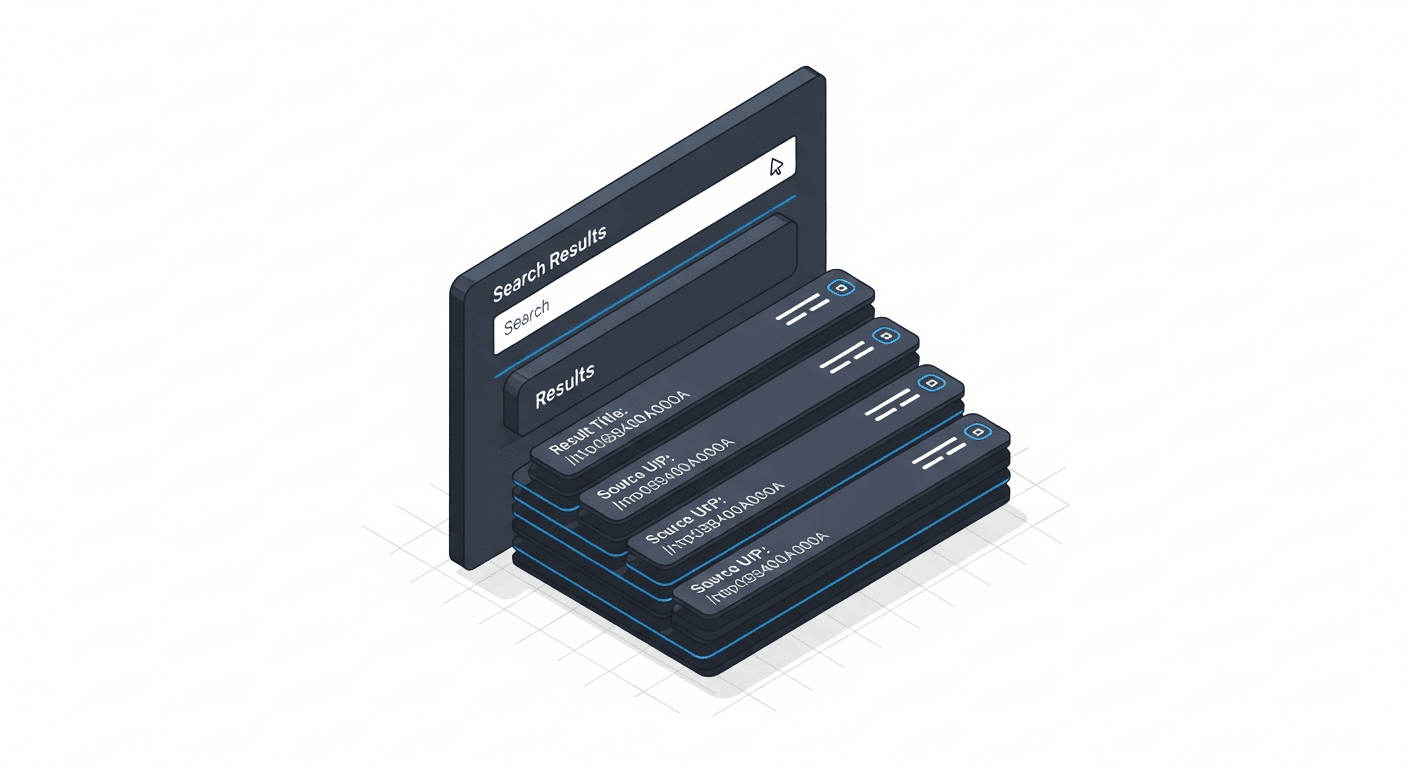
Every Perplexity response includes clickable inline citation numbers that link directly to the source. This is the most favourable format for generating referral traffic from an AI engine.
The numbers speak for themselves. According to data from SimilarWeb (Tel Aviv/London), Perplexity reached 200 million monthly visits in Europe in early 2026, with 340% growth over 12 months. It is the fastest-growing AI engine in Europe.
And most importantly: Perplexity's user profile is exactly your target. B2B decision-makers, technology executives, early adopters. People who make purchasing decisions.
How Perplexity selects its sources
Perplexity uses a hybrid research system:
Own index. PerplexityBot continuously crawls the web to build its own index. If PerplexityBot cannot access your site (robots.txt, IP blocking), you are invisible.
Bing and Google. In addition to its own index, Perplexity queries Bing and Google to enrich its results. Being well-ranked on both engines increases your chances of being cited.
Source selection criteria:
| Criterion | Importance | Detail |
|---|---|---|
| Direct relevance | Critical | The page must directly answer the query, not tangentially |
| Domain authority | High | Sites recognised in their domain. Press, institutions, experts. |
| Freshness | High | Recent content strongly preferred, especially for factual queries |
| Depth | Medium-High | Detailed and comprehensive content preferred over superficial content |
| Structure | Medium | Well-structured content (headings, lists, tables) facilitates extraction |
| Diversity | Medium | Perplexity tries to cite varied sources, not just a single domain |
Aleyda Solis, international SEO consultant based in Madrid, noted at BrightonSEO 2025: "Perplexity is the most meritocratic AI engine. If your content is the best on a topic, it will be cited. No need for a Domain Authority of 90."

Optimising your content for Perplexity
1. Unblock PerplexityBot
First step, the most obvious yet overlooked: check that your robots.txt does not block PerplexityBot. If it does, you are invisible. Explicitly add User-agent: PerplexityBot / Allow: / to be sure.
2. "Direct answer" format
Perplexity extracts short and precise text blocks. Each section of your article must start with a direct answer in 2-3 sentences, then develop. This is the same "Answer-First" principle of GEO.
3. Statistics and precise figures
Perplexity loves citing statistics. Include precise, sourced, and current figures in your content. "The average conversion rate in B2B e-commerce in Europe is 2.7% in 2026 (source: Statista)" will be extracted and cited.
4. Comprehensive coverage
Perplexity favours complete guides that cover a topic from A to Z. A 300-word article will never be cited. A 2000-word guide with tables, FAQ, and sources will be.
5. Regular updates
Add a visible last-updated date to every page. Perplexity takes freshness into account. An article updated in 2026 will be preferred over an identical article from 2024.
Perplexity vs ChatGPT: citation differences
| Aspect | Perplexity | ChatGPT |
|---|---|---|
| Citation format | Clickable inline numbers (very visible) | Links at the bottom of the response (less visible) |
| Search source | Own index + Bing + Google | Bing + direct web browsing |
| Number of sources cited | 5-15 per response | 3-8 per response |
| Transparency | Very high (sources always visible) | Variable (depending on mode) |
| Referral traffic | High (clickable citations) | Medium (less prominent links) |
| User profile | Tech decision-makers, early adopters | General public + professionals |
The conclusion: Perplexity cites more sources and in a more visible way. It is potentially the best AI engine for generating referral traffic. If you need to choose a single AI engine to target first, Perplexity is an excellent choice. But ideally, optimise for both -- and for Google AI Overview as well.
Complete strategy for Perplexity
Here is our 5-step playbook for maximising Perplexity citations:
Step 1: Benchmark. Test your 20 key queries on Perplexity. Note: are you cited? In what position? Which competitors are cited? What content format dominates?
Step 2: Technical. Unblock PerplexityBot, implement llms.txt, verify your Google AND Bing indexation, add Schema.org to all key pages.
Step 3: Quick wins. Optimise your 5 best pages: add direct answers at the start of sections, sourced statistics, comparison tables, a structured FAQ.
Step 4: Creation. Produce content specifically designed for queries where Perplexity does not yet cite you. Format: 1500-2500 words, AEO structure, European sources cited.
Step 5: Monitoring. Check your Perplexity citations every week. Use the AI Visibility Score to track your progress.
Get cited by Perplexity
We audit your presence in Perplexity and build a customised citation strategy.
FAQ
Is Perplexity free?
Yes, Perplexity offers a free version with a limited number of "Pro" queries (with in-depth research). The paid version (Perplexity Pro, $20/month) offers unlimited searches and access to more powerful models. Most B2B users use the Pro version.
How many sources does Perplexity cite per response?
In standard mode, Perplexity generally cites 5 to 8 sources. In "Pro" mode (in-depth research), this number rises to 10-15 sources. Each source is numbered and clickable directly within the response text.
Does Perplexity use Google or Bing?
Perplexity uses all three: its own index (built by PerplexityBot), Bing, and Google. That is why it is important to be well-ranked on both main search engines AND not to block PerplexityBot in your robots.txt.
Can my content be cited negatively by Perplexity?
Perplexity synthesises available information. If negative sources about your brand exist, they may be integrated into the response. The best defence is proactive: produce positive, expert and authoritative content that dominates results for your brand queries.
What is the difference between Perplexity and Google AI Overview?
Perplexity is an independent answer engine that always shows its sources. Google AI Overview is a feature integrated into Google results that appears above organic results. Both cite sources, but the format and selection criteria are different. Ideally, optimise for both.
Conclusion
Perplexity is the most transparent AI answer engine and the most favourable for referral traffic. Its inline citation model makes every response a direct visibility opportunity for your brand. And its growth is exploding in Europe.
The optimisation techniques are clear: expert, structured, fresh content, accessible to crawlers. Companies positioning themselves there now are harvesting citations (and traffic) that their competitors do not even suspect exist.
The rules have changed. Perplexity is where your prospects are searching.


