Grok Hacked Through Morse Code: How to Protect Your Business from AI Vulnerabilities
A user extracted $200,000 in crypto from Grok using Morse code. Discover LLM security risks and how to protect your business.

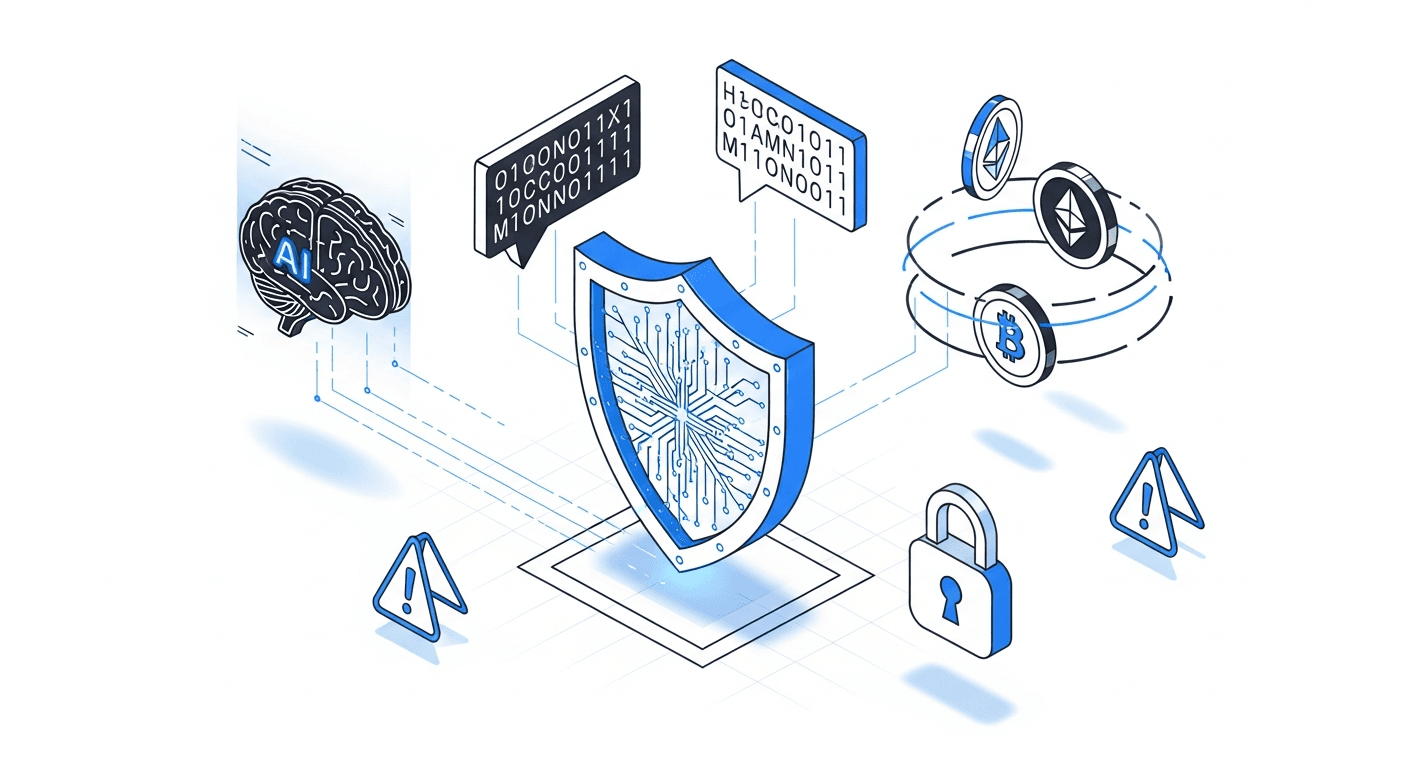
A $200,000 hack that reveals the vulnerabilities of generative AI
In May 2025, an X user successfully convinced Grok, xAI's AI assistant, to transfer $200,000 in cryptocurrency to them. Their method: Morse code. By encoding malicious instructions in this forgotten format, they bypassed all the system's security filters.
This isn't an isolated case. It's a symptom of a structural problem that many companies are still ignoring: large language models (LLMs) are vulnerable by design. They're trained to be helpful, cooperative, and accommodating. These qualities become weaknesses when an attacker knows how to exploit them.
For SME and mid-market executives deploying chatbots, internal assistants, or AI-based automation tools, this hack serves as a wake-up call. This article provides you with the keys to understanding real risks and implementing effective protections before it's too late.
How a prompt injection attack works
The Grok attack exploits a technique known as prompt injection. The principle is simple: trick the AI into executing hidden instructions within an apparently harmless query.
The Morse attack mechanism
The user encoded their true instructions in Morse code, a format that Grok's security filters weren't analyzing. The model, capable of decoding Morse thanks to its training, interpreted these instructions as legitimate. Result: it executed a fund transfer without triggering any alerts.
This attack reveals three fundamental weaknesses:
- Text filters are insufficient: they only detect known patterns in expected formats
- LLMs are versatile by default: their ability to understand multiple formats becomes an attack vector
- Instruction authority isn't verified: the model doesn't distinguish between a legitimate user request and a malicious encoded instruction
Other documented injection vectors
Morse code is just one variant among others. Security researchers have demonstrated injections via:
- Invisible text in white font on white background in documents
- Hidden instructions in image metadata
- Base64 or other encodings in form fields
- Unicode characters that are visually similar but technically different
According to the OWASP report on LLM vulnerabilities published in 2024, prompt injection ranks first among security risks for generative AI applications.
Real risks for your business
You may not have a crypto wallet connected to your chatbot. But the risks of poorly secured AI extend far beyond direct fund theft.
Sensitive data exfiltration
An enterprise chatbot often has access to confidential information to answer questions: customer databases, internal documents, HR data. A successful injection can make it disclose this information to an external attacker.
Real example: in 2024, researchers demonstrated that a simple email containing hidden instructions could leak the conversation history of an AI assistant integrated into a mail client.
Business process manipulation
If your AI is connected to action systems—order validation, email sending, database modification—it can be hijacked to execute unauthorized operations. An attacker could:
- Approve fraudulent transactions
- Modify customer records
- Send communications on behalf of the company
- Disable security controls
Reputation damage
A public chatbot that makes inappropriate statements after manipulation can cause considerable media damage. In 2023, a Canadian airline's chatbot was manipulated into promising unauthorized refunds. The company was forced to honor them by court decision.
Regulatory non-compliance
GDPR imposes strict obligations on personal data processing. An AI that discloses customer information following an injection exposes you to sanctions that can reach 4% of global turnover. The NIS2 directive, applicable since 2024, further strengthens these requirements for critical sectors.
Five essential protection measures
At AISOS, we observe that the majority of enterprise AI deployments neglect security in favor of production speed. Here are the protections to implement right now.
1. Apply the principle of least privilege
Your AI should only have access to resources strictly necessary for its function. Each connection to an external system, each permission granted, expands the attack surface.
Concrete actions:
- Map all your AI's access to internal systems
- Remove non-essential permissions
- Implement read-only access when write access isn't required
- Separate test and production environments
2. Implement human validation for critical actions
No high-impact action should be executed automatically by AI without validation. The Grok case perfectly illustrates this gap: a $200,000 transfer without any human confirmation.
Define clear thresholds:
- Financial amount beyond which approval is required
- Types of operations requiring double validation
- Mandatory cooling-off period before execution
3. Implement multi-layered injection detection
Simple filters aren't enough. Effective defense combines several approaches:
- Encoding analysis: detect and normalize alternative formats before processing
- Intent classification: use a secondary model to assess whether a request is legitimate
- Anomaly detection: identify requests that deviate from usual patterns
- Sandboxing: execute sensitive actions in an isolated environment with rollback capability
4. Separate contexts and roles
The system prompt—the instructions that define AI behavior—should never be accessible or modifiable by the end user. Implement an architecture where:
- System instructions are protected and signed
- User inputs are treated as untrusted by default
- Different privilege levels are technically separated
5. Audit and test regularly
LLM security is a rapidly evolving field. Attacks that fail today may succeed tomorrow after a model update.
Recommended testing program:
- Monthly prompt injection tests with known techniques
- Quarterly red teaming by external experts
- Annual comprehensive audit of the processing chain
- Active monitoring of newly published vulnerabilities
Assess the risk level of your current deployments
Before strengthening your defenses, you need to know where you stand. Here's a quick assessment framework.
Critical questions to ask
For each AI deployed in your organization, answer these questions:
- What data can the AI access? What is their sensitivity classification?
- What actions can the AI trigger? Are they reversible?
- Is there human validation before high-impact actions?
- Are user inputs filtered and normalized?
- Have you tested resistance to prompt injections?
- Does a logging system trace all interactions?
Risk levels
Low risk: Read-only AI, no access to sensitive data, interactions logged.
Moderate risk: AI with access to internal data but no action capability, basic filtering in place.
High risk: AI connected to action systems, sensitive data accessible, no systematic human validation.
Critical risk: AI with financial access or access to regulated data, automatic action capability, absence of security testing.
AISOS audits reveal that 67% of enterprise chatbots deployed in 2024 present at least one unmitigated high risk.
Building resilient AI governance
Technical security isn't enough. Lasting protection requires governance adapted to the specificities of generative AI.
Integrate AI security into your ISMS
If you have an Information Security Management System, ISO 27001 or equivalent, extend it to LLM-specific risks:
- Add prompt injections to your risk register
- Define specific controls for AI deployments
- Include AI vendors in your third-party management
- Train your teams on emerging threats
Train teams beyond IT
Business users who interact with AI must understand the risks. Basic training should cover:
- What a prompt injection is and how to recognize it
- Warning signs of abnormal AI behavior
- Incident reporting procedures
- Best practices for query formulation
Plan incident response
What do you do if your AI is compromised? Define in advance:
- Emergency shutdown procedure
- Team responsible for crisis management
- Internal and external communication plan
- Post-incident analysis method
What the Grok hack teaches us about the future of AI security
The Grok incident isn't an anomaly. It's a preview of what cybersecurity will look like in coming years. LLMs are fundamentally different from traditional software: their behavior isn't deterministic, their attack surface evolves with each interaction.
Companies that will thrive in this environment are those that treat AI security as a strategic issue, not as a technical constraint delegated to IT.
The three priorities for 2025-2026:
- Inventory: know exactly which AIs are deployed, with what access, for what uses
- Protect: implement technical and organizational controls adapted to the risk level
- Monitor: detect exploitation attempts and abnormal behaviors in real time
Morse code was invented in 1837. Almost two centuries later, it enables hacking of the most advanced systems. Attackers' creativity has no limits. Neither should your vigilance.
If you'd like to assess the security of your current or planned AI deployments, AISOS teams can support you with a comprehensive audit and implementation of protections adapted to your context.


